



Im going to talk about a solid, disciplined approach essentially mapping out a learning process: Concept > Formula Internalization > Tiered Practice > Revison and Review.
Although NDA written exam is a combination of two papers – Mathematics and GAT, the important one here is Mathematics. While not guaranteed but if you can clear this paper then chances are that you can clear NDA exam too as paper 2 GAT is much easier than mathematics. So, more focus on Mathematics than GAT? – Yes! 100%
For exams like the NDA, where you must solve 120 questions in 150 minutes, speed and accuracy demand as much focus as conceptual clarity.
Today i will tell you how to clear NDA Mathematics paper with just these 3 books and one long notebook.
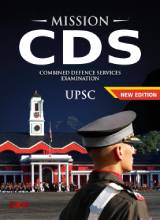
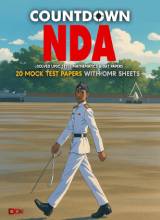
It’s proven time and again and you will feel the difference and confidence within 1 week of preparation. The 3 books you will need for this are Mission NDA, NDA Maths Formula book, NDA Countdown Mock test papers and a long practice notebook.
Open Mission NDA guide and begin with chapter 1 – check concept, understand practice examples, theory and formulas. Next, Do NOT go for practice exercise yet!!!
Now pick up NDA Maths formula book and see if you have covered all formulas, understand the types of formulas, understand laws and theorems with examples and tricks if any for that chapter. once you have memorised these, write it in the notebook and test your memorisation until you get it.
You’re ready to go back to chapter 1 from mission NDA Guide and head to practice exercises. The speciality of these practice exercise is that these are given level wise in 3 different levels so easy set of questions first, moderate next and toughest at the end. This will not break your confidence and you will tread step by step strengthening the strong foundation.
Now, circle ⭕️ questions from every level that you couldn’t solve. These are your weak areas that you have auto identified. Identify the exact weakness now. Is it in formula? concept? or theory? Sometimes questions are framed in such a way that formulas have to be tweaked to get the answer. If so, add the tweaked formula in your formula book for your future reference. Revisit the circled questions and solve again.
Are you able to solve them now? If yes – you would have successfully completed chapter 1 and there’s one hundred percent possibility that you will be able to solve any question of this chapter from previous year papers.
Similarly, complete rest of the chapters. Upon completing all, open your NDA Countdown pack and take booklet paper 1, solve it in time to test yourself. After finishing it don’t just rush to check marks. Revisit each question in booklet and see what were you thinking at the time of attempting and what went wrong? This way you understand yourself and your own pattern of attempting, skipping, guessing and your risk taking ability.
Do at least 1 paper every week and by the time you reach paper 10 you would have reached the pinnacle of your maths preparation. Your confidence will skyrocket and on the exam day.
Why this NDA exam strategy works?
This NDA strategy has worked for thousands of successful candidates, and these candidates suggested we make a separate formula book that covers every formula for every chapter. Also, they said that when they used actual upsc previous year question paper booklets things changed a lot for them. It build a lot of confidence before exam. They suggested that we provide similar mock test booklets instead of past papers to ensure the practice remains unique. This lead us to handpick the most interesting and important questions and make 10 UPSC paper booklets that are available in NDA Countdown. I will guarantee you that you will feel the difference in just one week.
Here is some “High Quality Advice” to augment a 3-book strategy and ensure you’re prepared to clear your exam in first attempt
The “Golden Trio” of Topics
While your books cover everything, remember that the NDA Math paper isn’t balanced equally. If you are short on time, prioritize these “Big Fish” chapters first to secure your cutoff. You need to focus on the NDA Maths chapter wise weightage.
- Calculus: Roughly 25-30 questions.
- Trigonometry: Around 20-22 questions.
- Probability & Statistics: Approximately 15-20 questions.
Master the “Reverse Engineering” Technique
Since NDA is a multiple-choice format, you don’t always need to solve the equation from scratch. In your practice notebook, train yourself to:
- Substitute options: Plug the given answers back into the equation to see which one is correct. You are not getting marks for steps here.
- Eliminate extremes: When you can assess that two options are mostly way off; focus on the remaining two.
- Careful Analysis: Ensure the units/dimensions of your answer match the question and options because many a times this oversight leads to incorrect answer though you know how to solve the question.
The Mock Test NDA Strategy
When you start using your NDA Countdown Mock Tests, don’t just solve them linearly. Use this technique :
- Solve only the “easiest” questions you can answer in under 45 seconds. This builds momentum and secures marks. They may not be serial wise! You have to understand that it’s completely okay to skip a series of questions. You can revisit them later! Your question Paper is prepared in a way so that you feel pressured.
- When passing through the moderate question that you are not able to solve – “circle” the question number so that you know in a glance when you revisit later. This way you will not waste time flipping through the sheet.
- If a “Tough” level question or even a tricky question takes more than 3 minutes, abandon it. The marks for a hard question are the same as an easy one. Don’t let the time you’ve already invested force you to keep solving it!
Why the Formula Book is Your Best Friend?
The NDA paper often includes direct property-based or formula based questions. For example, properties of Determinants, Vector products, or Conic sections. But sometimes examiners frame the question so that you must tweak the formula slightly to solve it. Hence, the formula book isn’t just for memorising but pattern recognition. when for e.g you see a specific integration question your mind should automatically know how or which formula to use there before you even pick up your pen.
Just so you know, the easy questions are the ones that you know just by the look. In short you know the concept. Moderate questions are those that needs some time and understanding to apply the concept. Tough questions are those that are either very lengthy to solve or need two or more linked concepts or formulas.
Best wishes 🇮🇳❤️

 Order Now on Amazon