

When you think of the Indian Air Force, the first thing that comes to your mind is a fighter jet, right? This is because the two are quite synonymous. Hence, AFSB interviews remain incomplete without questions on it. Therefore, today, we share about the major fighter aircraft of Indian Air Force that help it stay a cut above.
Need for Fighter Aircraft of Indian Air Force
A fighter jet is any aircraft which is capable of combat. It is fast and maneuverable and can destroy enemy aircraft, bomb enemy territory, and indulge in air-based combat. Here are some reasons why we need IAF’s fighter aircraft:
- Countering the two-front threat from Pakistan and China
- Reducing the shortage of aircraft in the IAF fleet
- Protecting Indian airspace
- Projecting military clout in the air
- Modernizing with changing nature of warfare
Fighter Aircraft of Indian Air Force
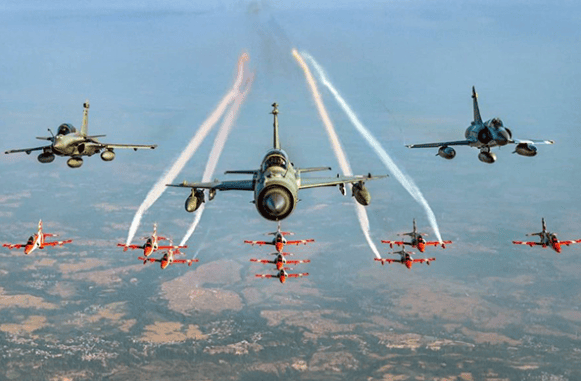
The Indian Air Force has several combat jets, which it has been using since its raising. While most of them are of foreign origin, India has upgraded each version to suit its requirements today. We look at six fighter aircraft of Indian Air Force for AFSB interview.
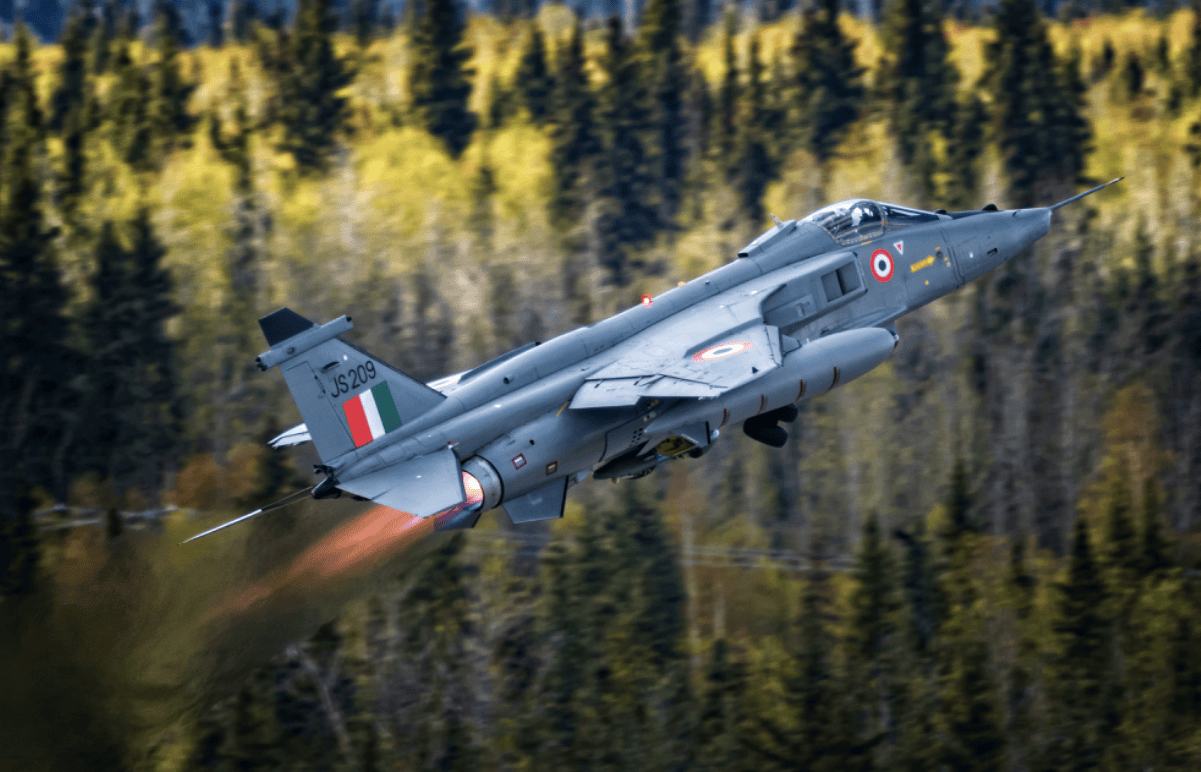
SEPECAT Jaguar
The SEPECAT Jaguar is a fighter aircraft, which is of British-French origin and serves as a ground attack jet. The IAF refers to it as Shamsher and has been operational since 1979.
The aircraft has undergone upgrades to the DARIN-III standard, as well as the AESA radar and ASRAAM air-to-air missiles. However, it will retire by 2030 owing to the demand for more modern combat aircraft.
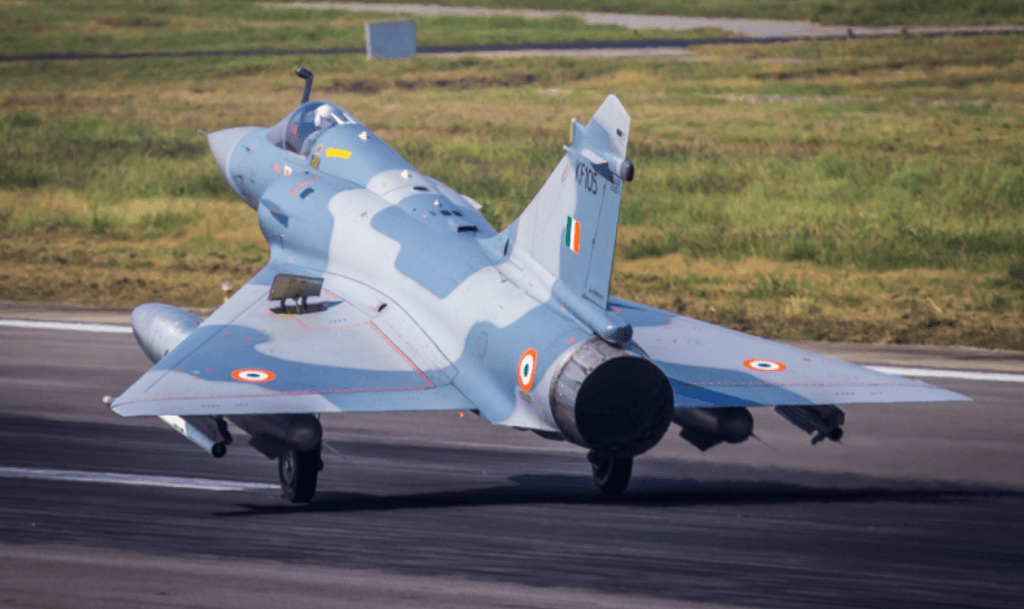
Dassault Mirage 2000
This fighter aircraft of Indian Air Force is popular as Vajra, that is, a thunderbolt in the organization since 1985. It is a fourth-generation multi-role combat aircraft of French origin and has a single engine.
The No. 1 and No, 7 Squadrons operate Mirage 2000 aircraft and it showcased its precision during Operation Safed Sagar (1999) and Operation Bandar (2019). This, too, shall retire by 2030.
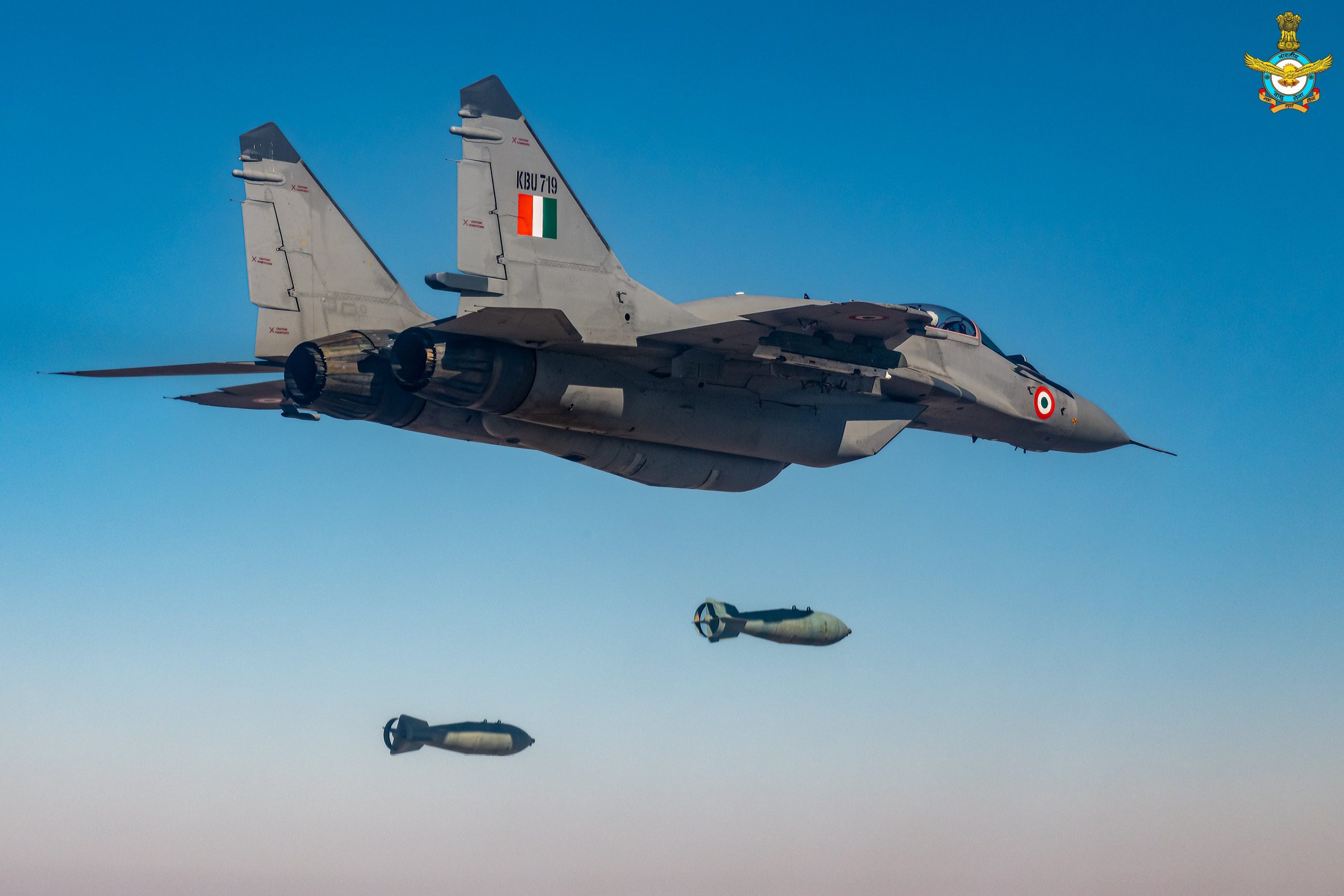
Mikoyan-Gurevich MiG-29
The MiG-29 is a fourth-generation Russian-made aircraft having Baaz as its nickname in the Indian Air Force. However, NATO refers to it as “Fulcrum”. It forms the IAF’s second line of defence as an air superiority aircraft.
Currently, IAF has about 69 MiG-29 UPG standard aircraft operated by No. 28 Squadron at Adampur, Punjab. This fighter aircraft of Indian Air Force can carry several weapons such as precision-guided bombs and BVRAAMs.
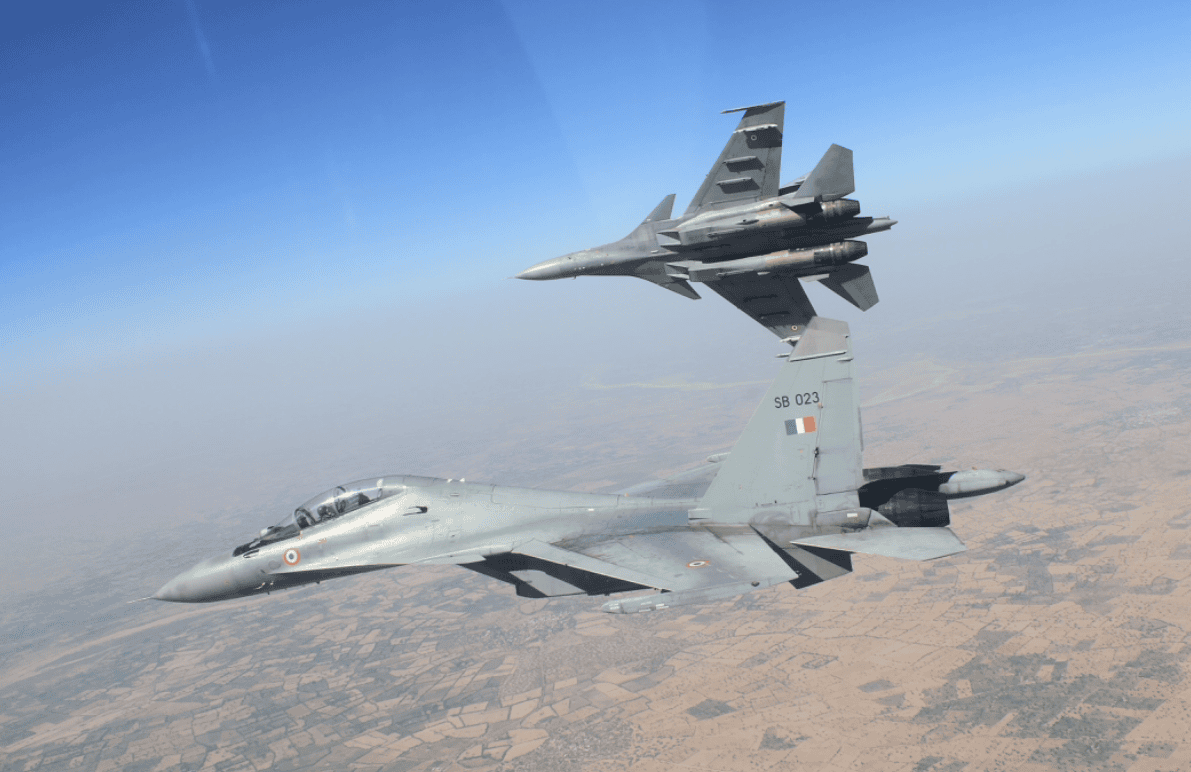
Sukhoi Su-30 MKI
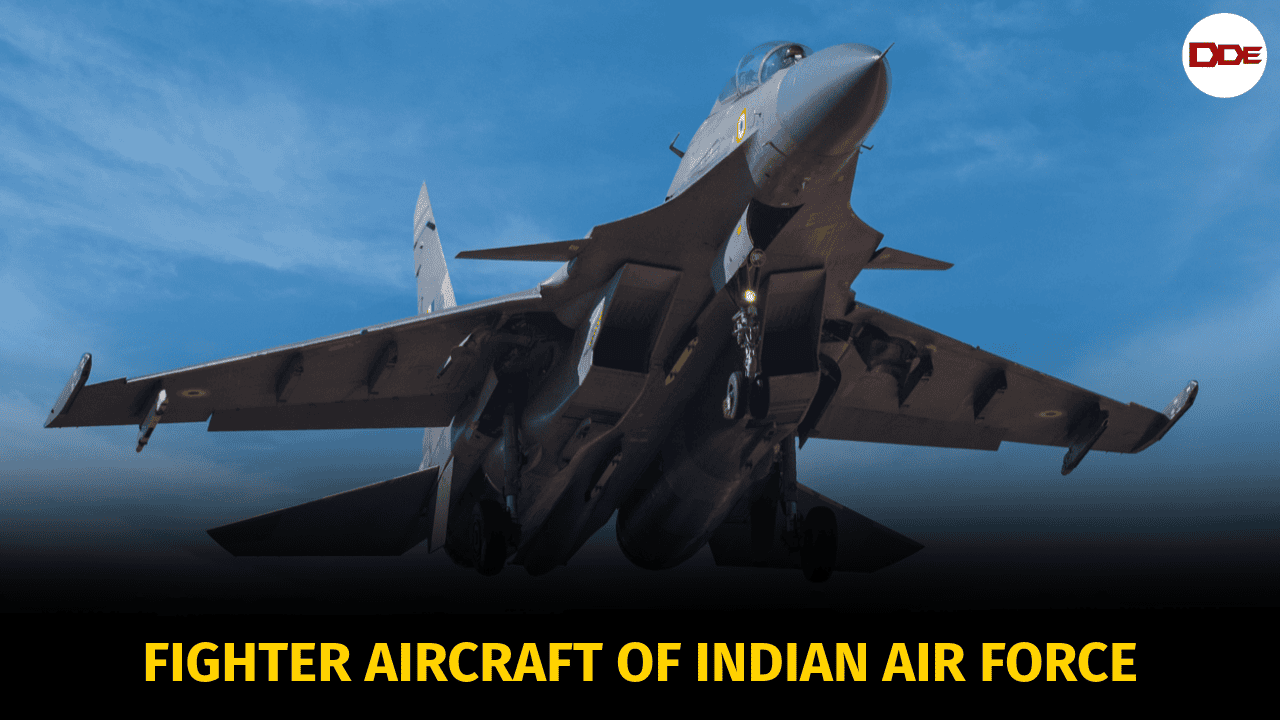
This forms the IAF’s primary air superiority fighter with additional air-to-ground strike capability. The MKI in its name stands for Modernized Commercial Indian, and it is a fourth-generation Russian aircraft. However, today, even HAL builds it indigenously under a license.
Su-30 MKI is a twin-engine, two-seater and nuclear-capable aircraft with a wing body sign design. The No. 20 and No. 222 Squadrons of IAF operate it. This fighter jet of IAF is capable of carrying air-to-air missiles, air-to-ground weapons, and can refuel itself while in flight.
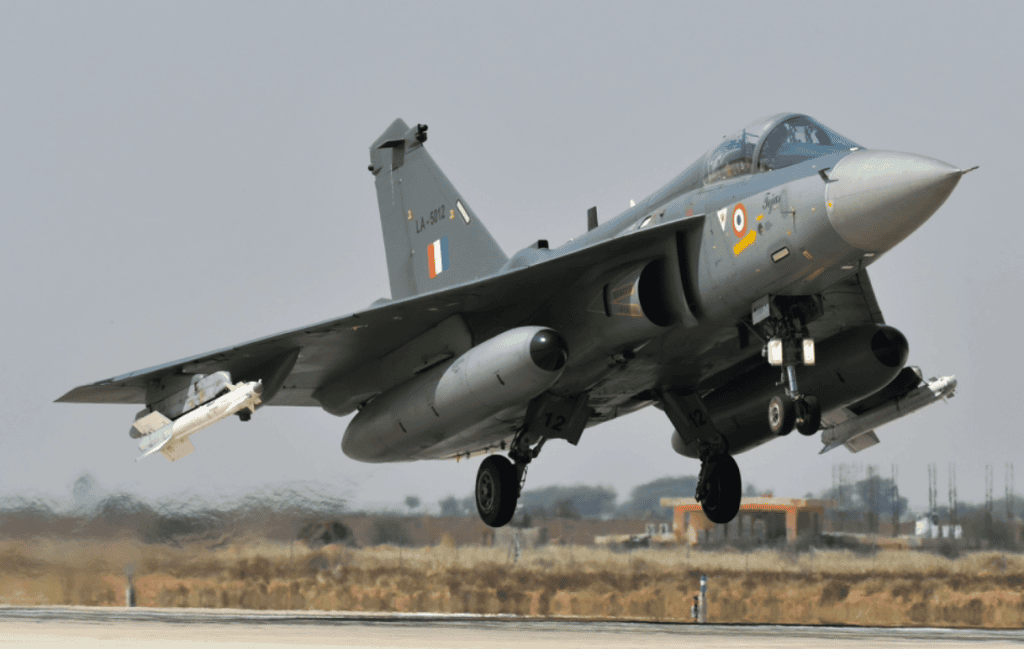
LCA Tejas
Developed by Hindustan Aeronautics Limited, Tejas is a 4.5-generation, single seat aircraft. It is a light combat aircraft, which has been upgraded to Mk1 and Mk1A versions.
HAL Tejas is operated by No. 45 and No. 18 Squadrons of IAF and is capable of air-to-air refuelling. Interestingly, this fighter jet of Indian Air Force lacks a horizontal tail and can carry a range of weapons, including precision-guided bombs.
Dassault Rafale
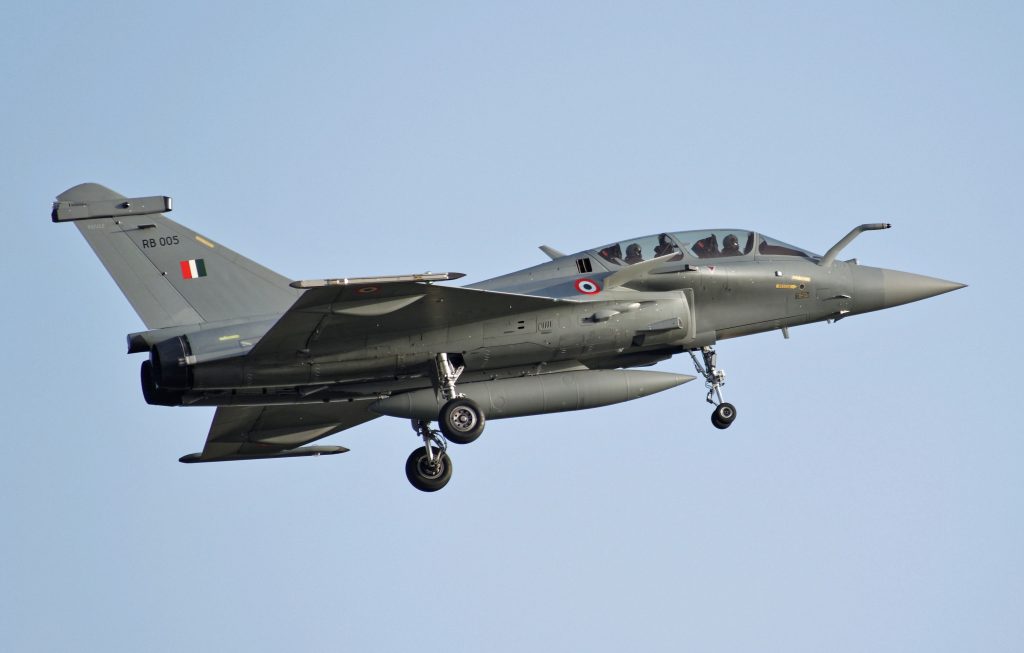
This is one of the most advanced fighter aircraft of Indian Air Force developed by France’s Dassault Aviation. The Rafale is a 4.5-generation, twin-engine, delta-winged jet having five variants:
| VARIANT | SPECIALIZATION |
| Rafale B | Twin-seater, used for reconnaissance, pilot training, and combat |
| Rafale C | Single-seater aircraft for air superiority and nuclear deterrence |
| Rafale M | Used by the Navy for maritime strikes and naval air defence |
| Rafale N | Nuclear-capable variant |
| Rafale R | Reserved for development of technology |
India currently has 36 Rafale fighter aircraft, while it has ordered 26 Rafale-M for the Indian Navy. Moreover, it has also signed an agreement for building 114 Rafale jets indigenously with Dassault Aviation.
Final Thoughts on Fighter Aircraft of Indian Air Force
The fighter aircraft in Indian Air Force are constantly undergoing upgrades to meet the present-day requirements of the country. A large portion of it is through indigenization. Hence, as an SSB aspirant, you must read about these developments for a robust performance in the personal interview.