


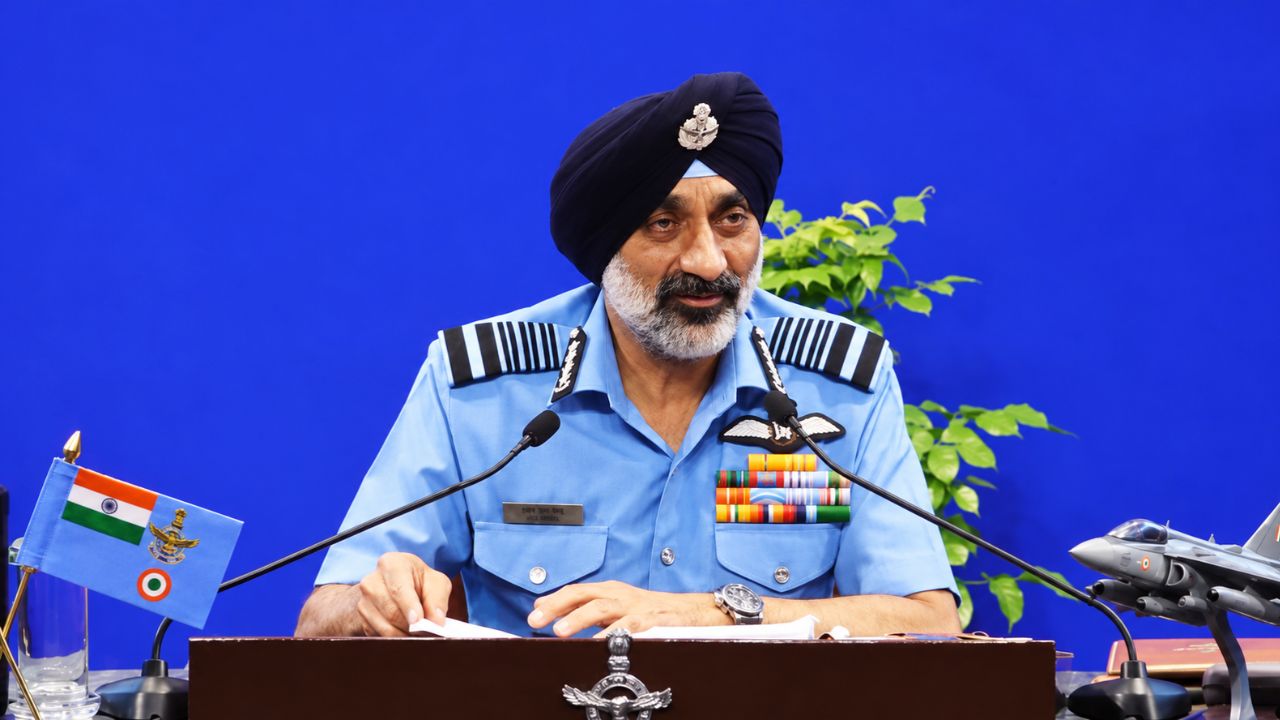
On 28 October, 2026 the news of the IAF Sports Complex closure on Lok Kalyan Marg in New Delhi until further notice caught everyone by surprise. This has caused the cancellation of the planned farewell of IAF chief, Air Chief Marshal Amar Preet Singh, PVSM, AVSM. This has occurred as the Centre continues to reclaim government land in the national capital for public purposes, which includes defence infrastructure.
Located inside Air Force Station, Race Course, near the official residence of the Prime Minister, the complex serves serving and retired military personnel and their families. Today, we tell you the reasons for the IAF sports complex closure and more.
Reasons For the IAF Sports Complex Closure
On 27 October, the members of the complex received a communication from relevant authorities, which informed them about the IAF sports complex closure from 5 am on 28 October until further orders. This place is an Indian Air Force facility which comprises a golf course, swimming pool, basketball court, restaurants and other recreational amenities.
Recently, the Ministry of Housing and Urban Affairs (MoHUA) shared that the land allotted to the IAF for operating the sports complex was required by the government. This followed a survey of the premises by the Land and Development Office (L&DO).
The IAF sports complex closure is being linked to the land reclamation exercise by the government. Hence, the IAF has requested the authorities to reconsider the decision, which speaks of the facility’s role beyond mere recreation for personnel.
Cancellation of Farewell of IAF Chief
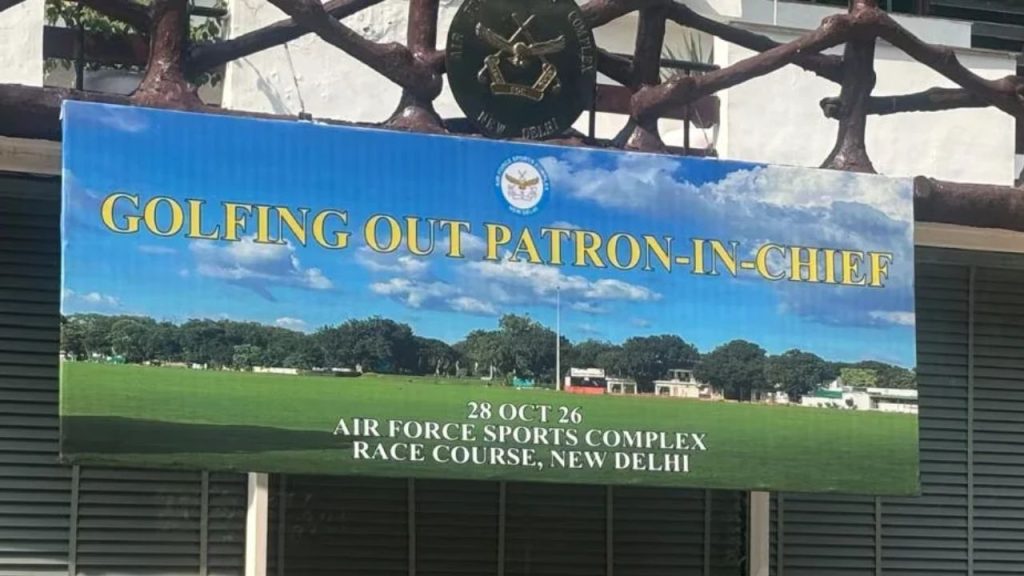
The IAF sports complex closure was not just an isolated decision. Therefore, it has also resulted in the cancellation of the traditional golfing farewell of the IAF Chief. This farewell is commonly called a golfing out, which was planned for Air Chief Marshal AP Singh before he superannuates on 31 October, 2026.
Such farewell events are organised for outgoing chiefs as they also serve as the patron-in-chief of the respective golf course. These provide an informal opportunity for serving senior officers and retired personnel to come together and mark the conclusion of the outgoing Air Chief’s tenure.
However, the closure has led to the cancellation of farewell of IAF Chief Air Chief Marshal Singh.
Effects of IAF Sports Complex Closure
The sports complex encompasses training facilities used by Agniveers and airmen, along with recreational amenities for serving personnel, veterans and their families. Hence, the Indian Air Force has highlighted these functions while seeking a reconsideration of the closure.
For military personnel, sports facilities play a major role in ensuring their physical fitness, team spirit and overall well-being. Simultaneously, these provide opportunities for the serving personnel and veterans to maintain social connections beyond their professional duties.
However, the IAF sports complex closure has also created uncertainty for hundreds of staff member, including the golf caddies and other contractual employees, who would also be affected.
Government Drive to Reclaim Land in Delhi
The IAF sports complex closure forms part of a wider exercise to reclaim high-profile government land parcels in Delhi. However, this is not the first time it has happened.
In May 2026, the Centre issued an eviction notice to the Delhi Gymkhana Club. The government cited a public-purpose clause in the original lease and the need to strengthen and secure defence infrastructure. However, this decision was later challenged by the club in the Delhi High Court.
Similarly, the government also took possession of the Jaipur Polo Ground and the Delhi Race Club under the government’s broader land reclamation exercise to prioritise the stated public and institutional requirements.
Final Thoughts
After the IAF sport complex closure, the future of the facility will depend on how the discussions between the relevant stakeholders unfold.
The immediate closure has disrupted a long-standing recreational space and a traditional farewell of IAF chief. This episode, however, highlights the challenge of balancing public land management with the operational and community requirements of institutions.