


When we think of the Indian Armed Forces, we often just elaborate on the Indian Army, Navy, and Air Force, but we miss out on an important service: the Indian Coast Guard or ICG. However, this service is extremely important for the maritime security of India. Hence, today, we tell you about all the Indian Coast Guard ranks that you must know of, not just from SSB perspective but also for awareness of those who guard us.
What is Indian Coast Guard?
Let us understand what the Indian Coast Guard is, and what it does. The ICG is the maritime force which protects the Indian coastline, territorial waters, and marine environment. It was established in 1978 under the Coast Guard Act, 1978.
The troops train at Indian Naval Academy, Ezhimala and live by their motto, “Vayam Rakshamah”, which is in Sanskrit and means, “We Protect”. The major responsibilities of all Indian Coast Guard ranks include:
- Coastal and maritime security
- Search and rescue (SAR) operations
- Responding to maritime pollution
- Avoiding smuggling through the maritime route
- Ensuring surveillance of India’s maritime zones
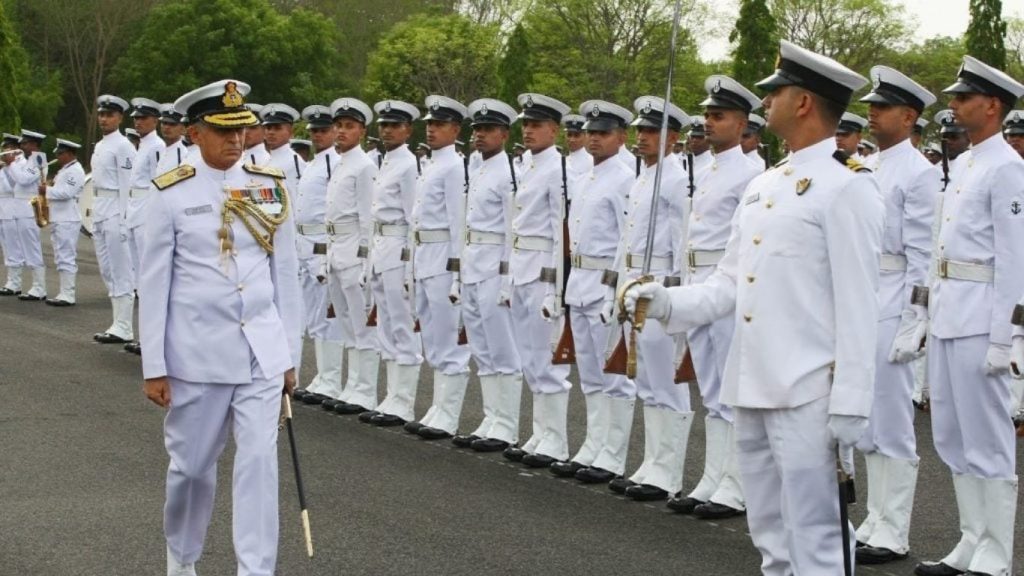
Hence, the Indian Coast Guard is an essential part of the Indian Armed Forces and every Indian must know about it.
ICG vs Indian Navy
Now you might wonder how the Indian Coast Guard is different from the Indian Navy. Well, while they might appear the same on the surface-level, the two are different in their duties and jurisdiction. Let us look into the same.
| INDIAN COAST GUARD | INDIAN NAVY |
| 1. Responsible for the maritime security and law enforcement of India. | 1. Responsible for offensive and defensive action along the maritime borders of India. |
| 2. Counter smugglers, illegal activities, and pollution. | 2. Counter external threats. |
| 3. Support Indian Navy and perform relevant duties at wartime. | 3. Lead naval warfare from the front line. |
| 4. Generally use patrol and pollution control vessels. | 4. Use warships, aircraft carriers, submarines, frigates, and corvettes among others. |
As you can see, the Indian Coast Guard has a different area of responsibility as against the Navy. However, when the need arises, both the forces also work in sync.
Indian Coast Guard Ranks
Finally, we are at the main topic. Now we will tell you about the Indian Coast Guard ranks which ensure a smooth and responsible functioning through collaboration. The personnel in ICG are divided into three groups:
- Commissioned officers
- Subordinate officers
- Non-commissioned officers (NCOs) and enlisted
Commissioned Officers
These are the highest Indian Coast Guard ranks, which form the top leadership of the organization. To become an officer, one needs to appear for the Coast Guard Selection Board, which happens in two phases: Preliminary (PSB), and Final (FSB). Hence, they are equivalent to the commissioned officers of the Indian Army, Navy, and IAF based on their position in the hierarchy.
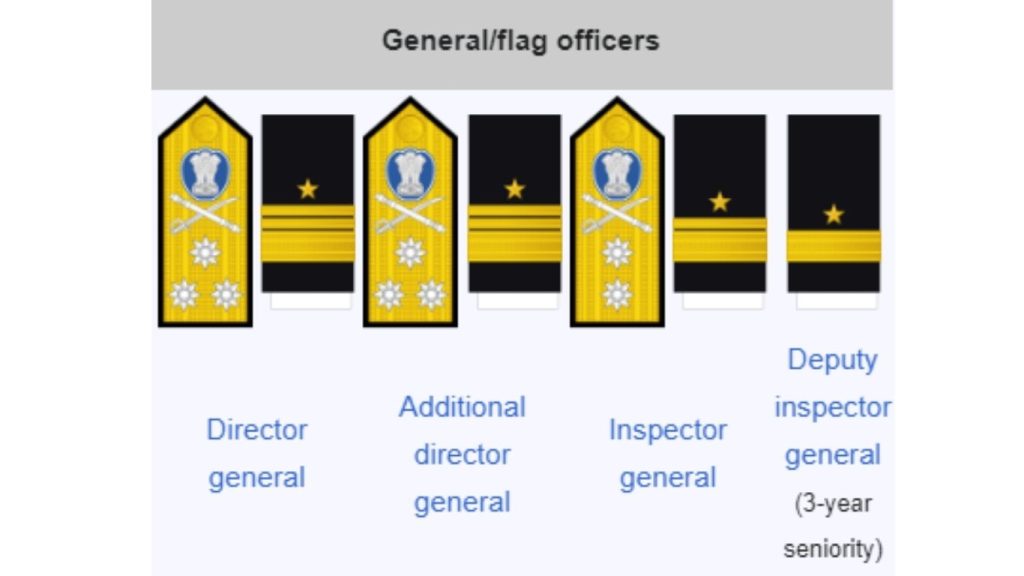
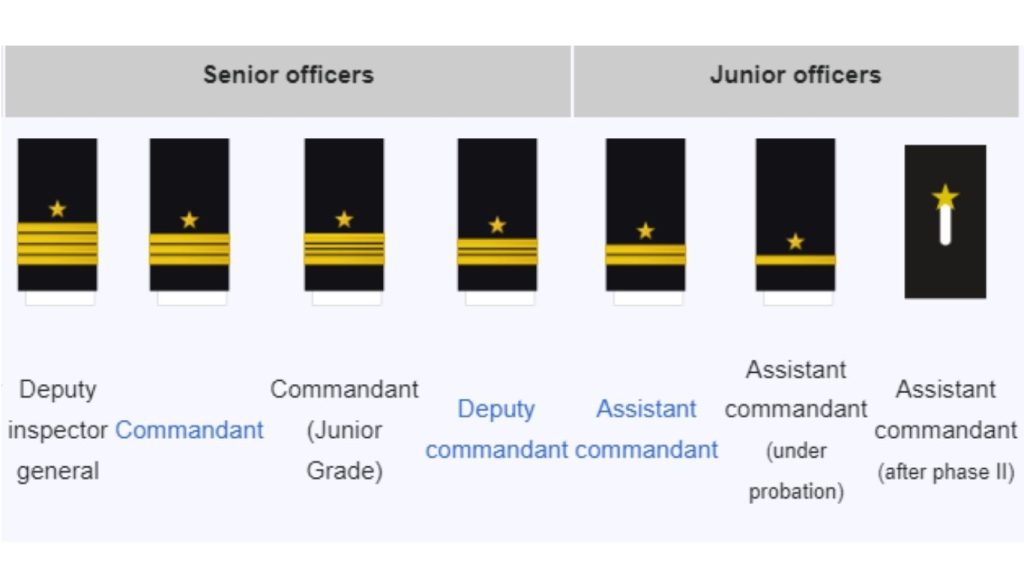
The complete list of commissioned officer ranks includes:
| General Officers | Senior Officers | Junior Officers |
| Director General | Deputy Inspector General | Assistant Commandant |
| Additional Director General | Commandant | Assistant Commandant (under probation) |
| Inspector General | Commandant (Junior Grade) | Assistant Commandant (after the second phase) |
| Deputy Inspector General (has 3-year seniority) | Deputy Commandant |
Please know that the highest ranking officer is the Director General, and it goes on till the Assistant Commandant (after Phase II).
Subordinate Officers
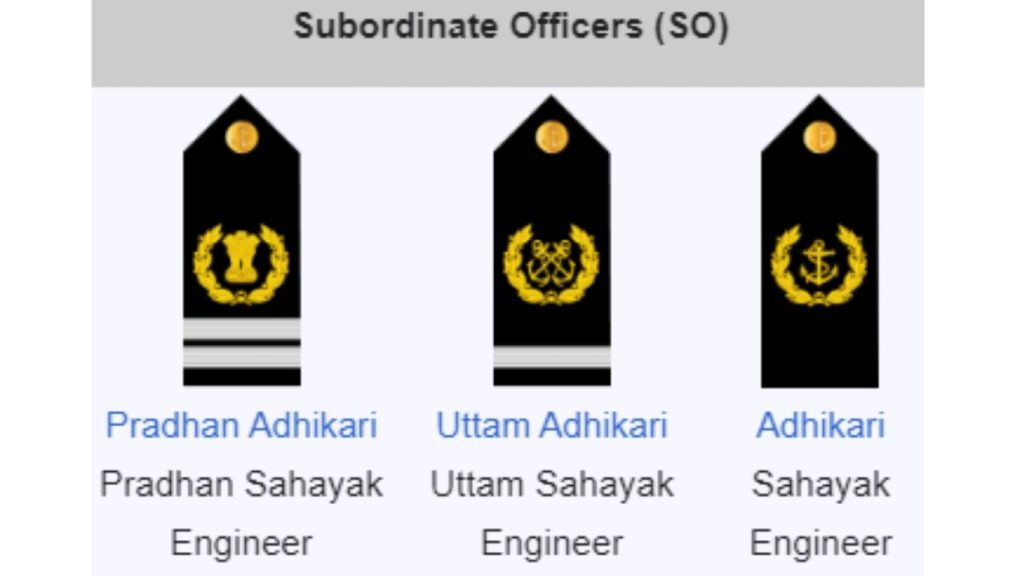
Next in the Indian Coast Guard ranks are subordinate officers or SOs, who joined the force as NCOs but have worked their way from the lower ranks to reach their present ones. These ranks act as the bridge between the commissioned officers and the NCOs, and are responsible for the relay of necessary information, and commands. These are:
- Pradhan Adhikari or Pradhan Sahayak Engineer
- Uttam Adhikari or Uttam Sahayak Engineer
- Adhikari or Sahayak Engineer
Non-Commissioned Officers and Enlisted
These ranks are the starting point of the Indian Coast Guard ranks hierarchy, and form its backbone. Most functions are carried out by these young men and women, and hence, without their support, it would be difficult to imagine the ICG. Their ranks include:
- Pradhan Navik or Pradhan Yantrik
- Uttam Navik or Uttam Yantrik
- Navik or Yantrik
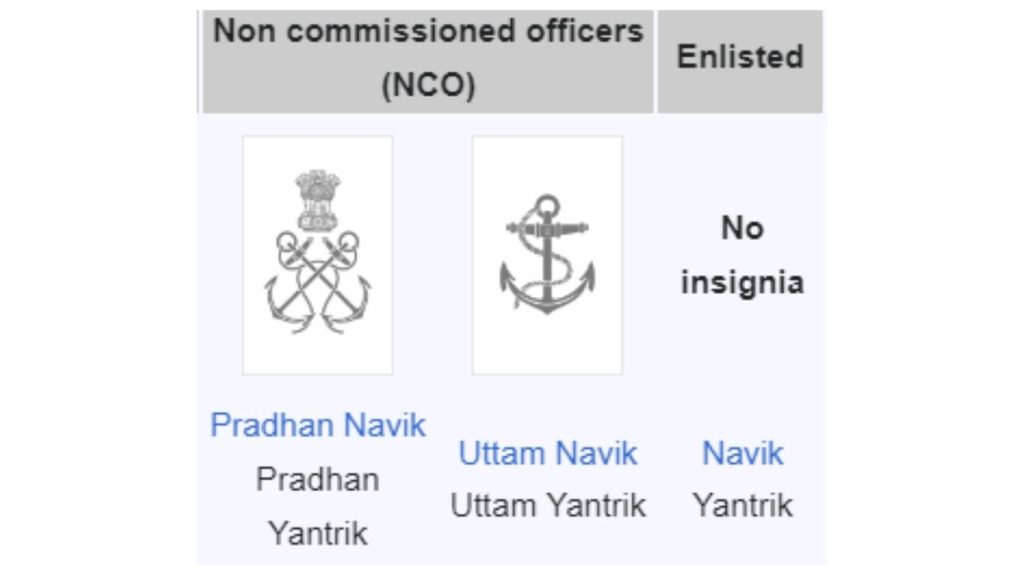
The distinction in the names exists because of the work profile of the specific individual. The yantriks are involved in the technical aspects of ICG, whereas the naviks perform other duties.
Final Thoughts
Each of the Indian Coast Guard ranks makes the organization ready for each challenge. As defence aspirants, therefore, you must know about these ranks and their equivalents in the respective services. Please know that without the ICG, the daily maritime security would not be as easy, and hence, the force is as essential to India as any other one.