


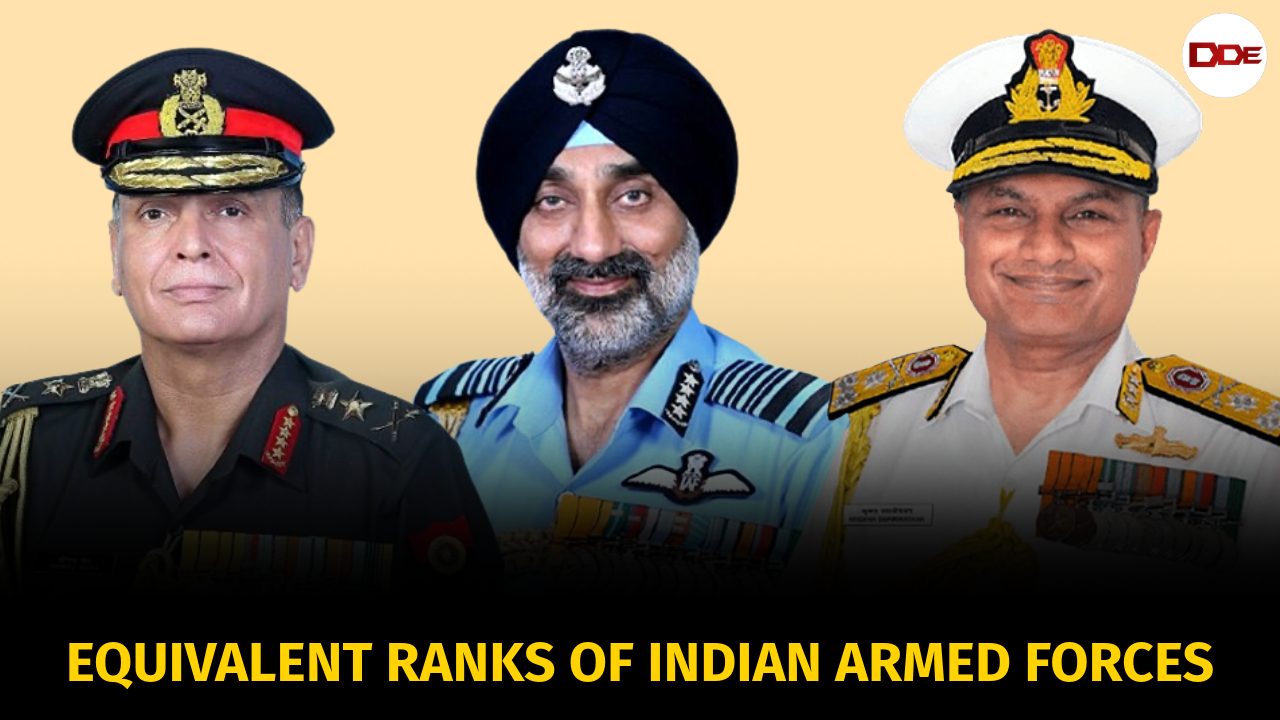
During the SSB personal interview, you may have encountered questions about the equivalent rank of a Brigadier or a Colonel in the Indian Navy or vice versa. Such technical questions often take freshers by surprise. Hence, if you are one of them, we tell you the equivalent ranks of armed forces that you must know, including the equivalent ranks of armed forces.
To further illustrate the importance of understanding equivalent ranks, let’s consider a hypothetical scenario where an Army aspirant is applying for a position in the Indian Navy. During the interview, the aspirant is posed a question about how a Colonel in the Army corresponds to ranks in the Navy. Not only does this test the aspirant’s knowledge, but it also reflects their overall understanding of the military structure, which is crucial for inter-service operations. Being able to articulate such equivalencies demonstrates a well-rounded knowledge base that interviewers highly value.
In this section, we will delve deeper into how understanding equivalent ranks can enhance teamwork between different branches of the armed forces. For instance, during joint operations, Army, Navy, and Air Force personnel must operate seamlessly together. A Lieutenant in the Army must recognise that a Group Captain in the Air Force holds a different level of authority, and vice versa. This awareness fosters respect and improves communication across the services, ultimately leading to mission success.
Moreover, having a thorough understanding of ranks aids in establishing mentorship relationships where seasoned officers can guide newcomers. For example, a Major in the Army may mentor a Squadron Leader in the Air Force, providing insights into leadership challenges faced across different services. This cross-pollination of ideas enhances the skill set of all involved and strengthens inter-service relationships.
Furthermore, in the context of defence procurement and inter-service dialogue, understanding equivalent ranks becomes essential. Defence officials and strategists often engage in discussions that include representatives from all branches. A strong grasp of ranks allows personnel to communicate effectively, ensuring that everyone is on the same page regarding duties, responsibilities, and expectations.
This understanding also plays a vital role during multinational operations. When armed forces from different countries collaborate, rank equivalencies help in establishing command structures. Knowing how the ranks of the British Army compare to the Indian Army, for example, is crucial for successful joint missions. This level of understanding can mitigate confusion and enhance operational efficiency.
Relevance of Knowing Equivalent Ranks of Armed Forces
Understanding the equivalent ranks of armed forces can greatly enhance your confidence and readiness when facing interviews and assessments, especially regarding the equivalent ranks of armed forces.
You might wonder why you should know the equivalent ranks of armed forces. If you’re going for an Army SSB, what difference does the Air Force or Navy-related information make? Honestly, it does make a difference, especially when discussing the equivalent ranks of armed forces.
While each service-specific SSB selects candidates for either of the tri-services, we have to admit that the armed forces do not function in silos. Hence, inter-service questions check:
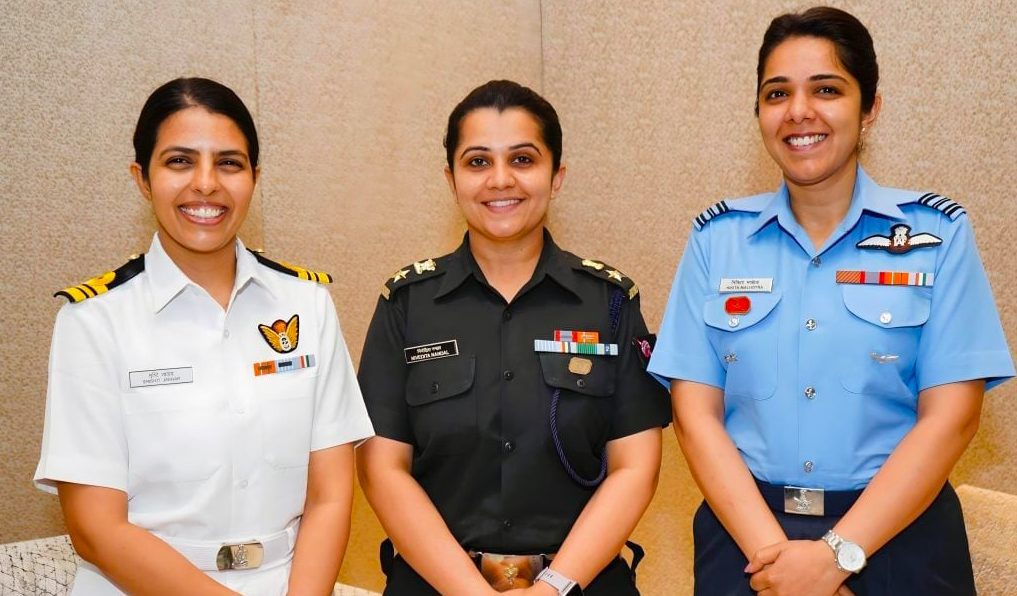
- Awareness about other services, even if basic instil knowledge about hierarchy in the armed forces, as tomorrow, as a Lieutenant you must know who is senior to you in another service
- Test you under stress
Additionally, it is important to acknowledge how rank structures differ even within allied forces. For instance, a Captain in one military may have a different level of responsibility compared to a Captain in another branch. This variance highlights the necessity for armed forces personnel to be well-versed in rank equivalences, ensuring clarity in roles and responsibilities during collaborative efforts.
Many a time, the IO asks candidates about the procurements of IAF while they are sitting for a personal interview at an army board! The idea is to bring out the best in them through external stresses.
Commissioned officers not only lead troops but also play a pivotal role in strategic decision-making. Their understanding of equivalent ranks allows them to assign roles effectively during exercises and operations, ensuring that each member of the team is utilised according to their capabilities. Leadership in the armed forces often hinges on the ability of officers to adapt their approach based on the ranks and experiences of those they lead.
Equivalent Ranks of Armed Forces
Each service of the Indian Armed Forces follows a rank structure divided into three parts: commissioned officers, JCOs/Warrant Officers/Petty Officers, and NCOs/Airmen/Sailors. Let us look at the equivalent ranks of armed forces now.
Warrant officers and JCOs also contribute significantly to the operational success of military missions. Their foundational experience allows them to bridge the gap between enlisted personnel and commissioned officers. By being aware of equivalent ranks, they can facilitate smoother communication and mentorship, thus enhancing the overall effectiveness of the unit.
Commissioned Officers
Additionally, NCOs, airmen, and sailors are crucial to the execution of daily tasks and missions. Their roles may seem less glamorous compared to officers, but they are essential to maintaining operational readiness and effectiveness. Acknowledging their ranks helps officers appreciate the contributions of all personnel, fostering a culture of respect and teamwork.
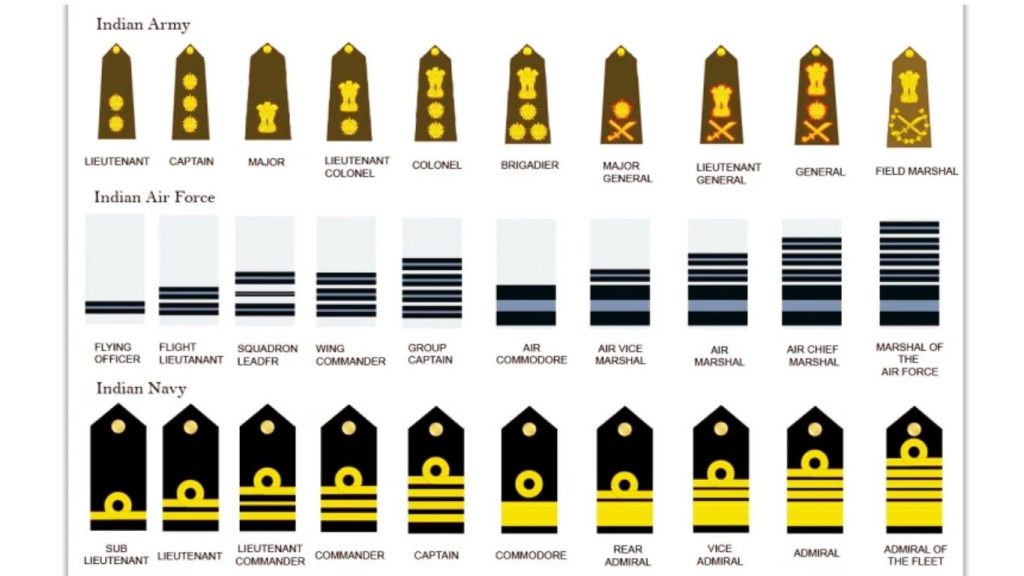
First in the equivalent ranks of armed forces are the commissioned officers. These are personnel who clear exams like UPSC CDS/NDA and AFCAT among others and get recommendation in the SSB interview. Hence, they lead the troops across services.
| INDIAN ARMY | INDIAN AIR FORCE | INDIAN NAVY |
| Field Marshal | Marshal of the IAF | Admiral of the Fleet |
| General | Air Chief Marshal | Admiral |
| Lieutenant General | Air Marshal | Vice Admiral |
| Major General | Air Vice Marshal | Rear Admiral |
| Brigadier | Air Commodore | Commodore |
| Colonel | Group Captain | Captain |
| Lieutenant Colonel | Wing Commander | Commander |
| Major | Squadron Leader | Lieutenant Commander |
| Captain | Flight Lieutenant | Lieutenant |
| Lieutenant | Flying Officer | Sub Lieutenant |
In conclusion, the understanding of equivalent ranks of armed forces serves as a foundation for effective inter-service collaboration, leadership, and operational success. It equips candidates with the necessary knowledge to navigate various scenarios they may encounter in their military careers, bolstering their confidence and preparedness during interviews and assessments.
JCOs/Warrant Officers/Petty Officers
These are personnel who enter the service at the lowest level in the hierarchy of equivalent ranks and get promotions over their years of service.
| INDIAN ARMY | INDIAN AIR FORCE | INDIAN NAVY |
| Subedar Major | Master Warrant Officer | Master Chief Petty Officer I |
| Subedar | Warrant Officer | Master Chief Petty Officer II |
| Naib Subedar | Junior Warrant Officer | Chief Petty Officer |
NCOs/Airmen/Sailors
These are troops who enrolled through recruitment rallies or relevant exams for entry-level positions. They are placed lower in the hierarchy, yet they form the backbone of all military operations.
| INDIAN ARMY | INDIAN AIR FORCE | INDIAN NAVY |
| Havaldar | Sergeant | Petty Officer |
| Naik | Corporal | Leading Rate |
| Lance Naik | Leading Aircraftman | Seaman I |
| Sepoy | Aircraftman | Seaman II |
Final Thoughts
Ultimately, a comprehensive understanding of the equivalent ranks of armed forces is not just beneficial but essential for anyone aspiring to join the military. It provides clarity on command structures, enhances inter-service communication, fosters respect among ranks, and prepares candidates for the multifaceted challenges they will face in their careers.





What about the equivalent ranks of Indian Coast Guard,do include it also?
Indeed. The ICG follows a distinct ranking structure. We shall add a detailed blog on this topic soon. Thank you for the suggestion.