

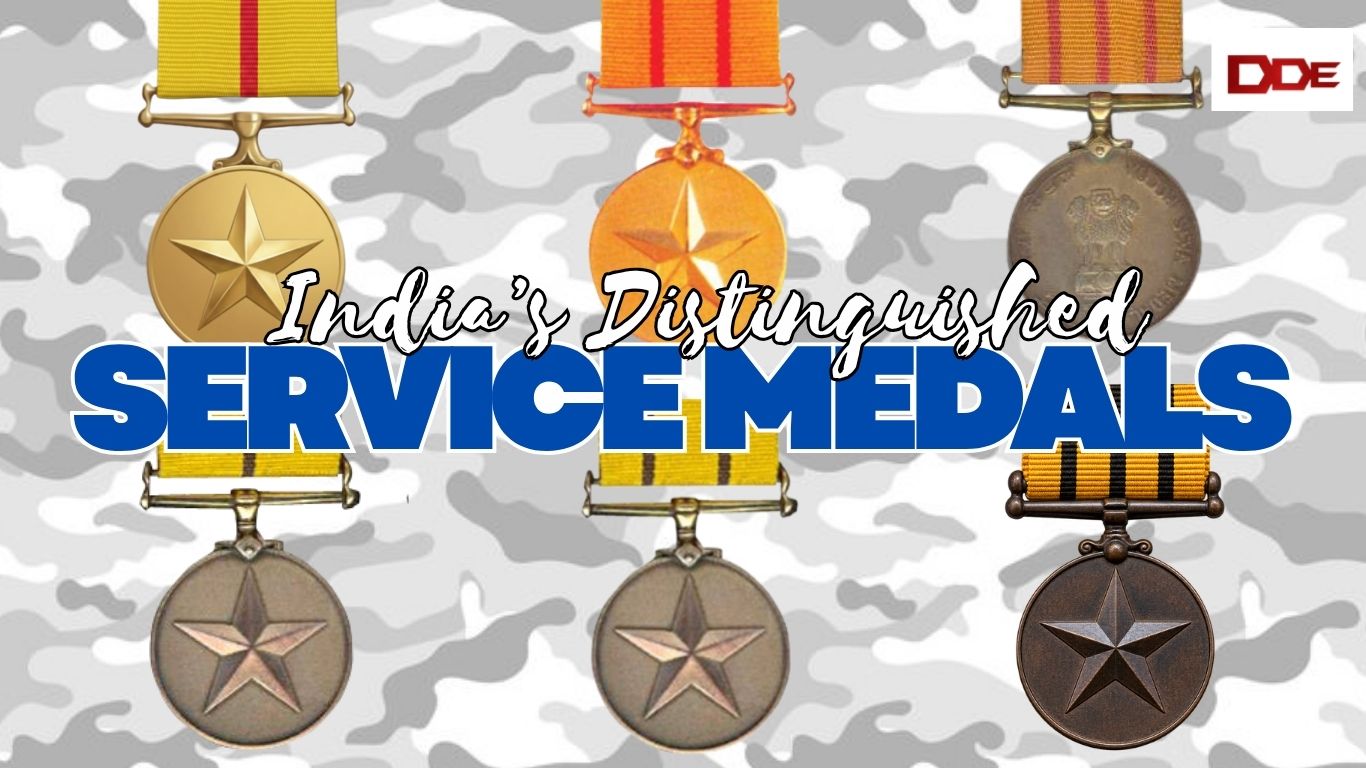
The distinguished service medals of India are awards conferred on the Indian Armed Forces personnel for their distinguished service in the forces. These recognize the exceptional service of a personnel on duty and focus on the quality of service. Hence, the personal interview at SSB may focus on a few questions around these accolades. Hence, we tell you about the six medals of India that speaks volumes about the personnel during service.
What are Distinguished Service Medals of India?
You might wonder what these are, and how they are different from the gallantry awards. As we have laid down carefully, the distinguished service medals of India are conferred on personnel of the military for their exceptional service over the years. This is contrary to the gallantry awards, which honours acts of bravery. Here are some key differences between the two:
| Service Medals | Gallantry Awards |
| 1. Awarded for exceptional service | 1. Awarded for supreme bravery |
| 2. May not be related to combat | 2. Necessarily related to combat or risky situations |
| 3. Examples include PVSM, AVSM, and SM | 3. Examples include PVC, MVC, and VrC |
However, just like gallantry awards, the distinguished service medals of India are divided into two categories:
- Wartime Service Medals, for exceptional service when the country was at war or conflict.
- Peacetime Service Medals, for exceptional service in conditions other than war/conflict.
Let us look at each category now.
Distinguished Service Medals of India
The distinguished service medals of India are of two kinds, based on the area of service. Each has its own insignia, and specifications, which exemplify the glorious service of the awardee.
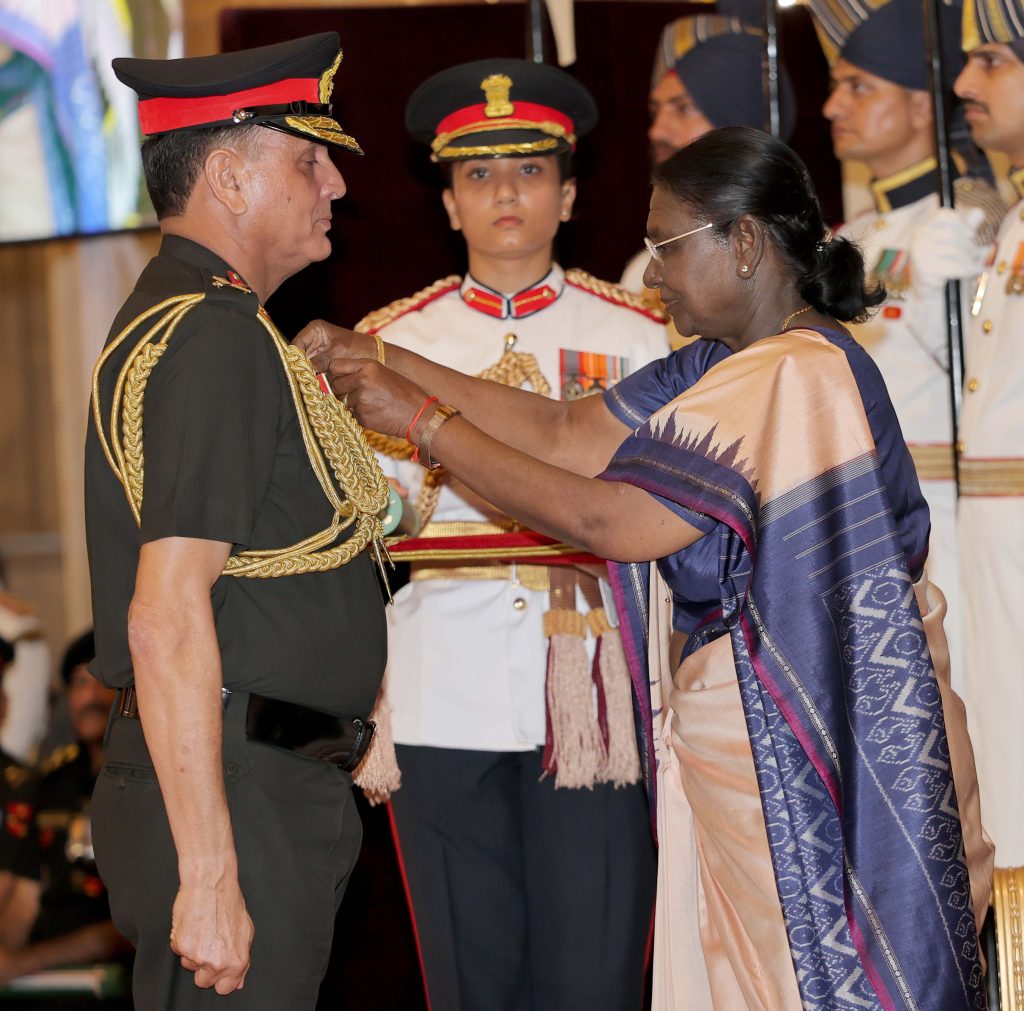
Wartime Service Medals
The wartime service medals are awarded for service during war, conflict or military operation in the face of the enemy. These recognize the personnel’s participation or contribution in that particular area, as against the gallantry awards which recognize individual acts of valour. These medals are of three kinds:
Sarvottam Yudh Seva Medal
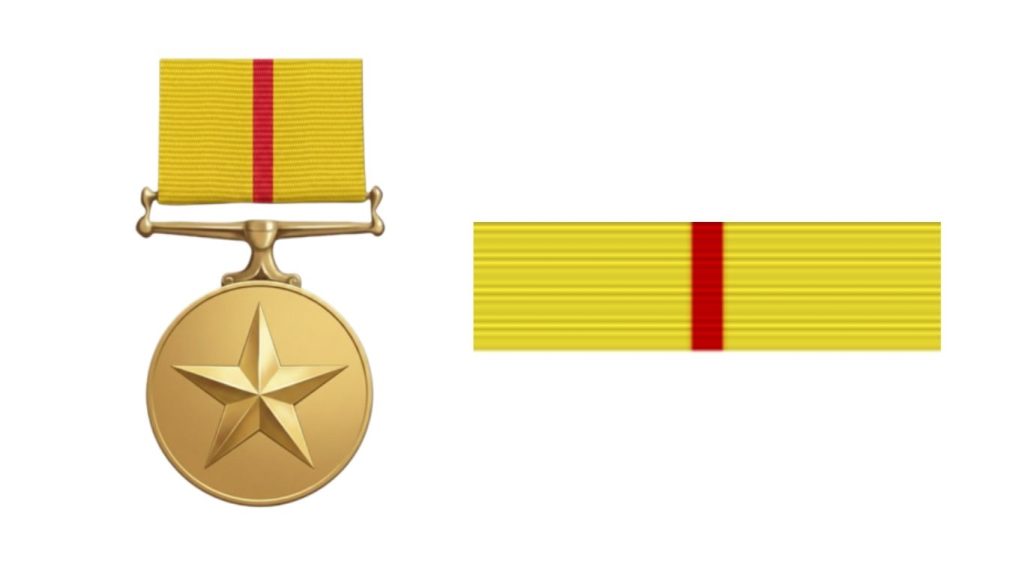
This is the first and the highest of the wartime service medals of India, which is abbreviated as SYSM and translates to, “Ultimate War Service Medal”. It was established in 1980 to recognize the contribution of those who contribute exceptionally at wartime.
The SYSM is a circular medal with gold gilt. Its back features the National Emblem of India with the words, “Sarvottam Yudh Seva Medal” written around it. Its front has a five-pointed star. Some of its notable recipients include Air Marshal Awadhesh Kumar Bharti and Lt General Pratik Sharma.
Ribbon: Golden with one vertical red stripe in the centre
Uttam Yudh Seva Medal
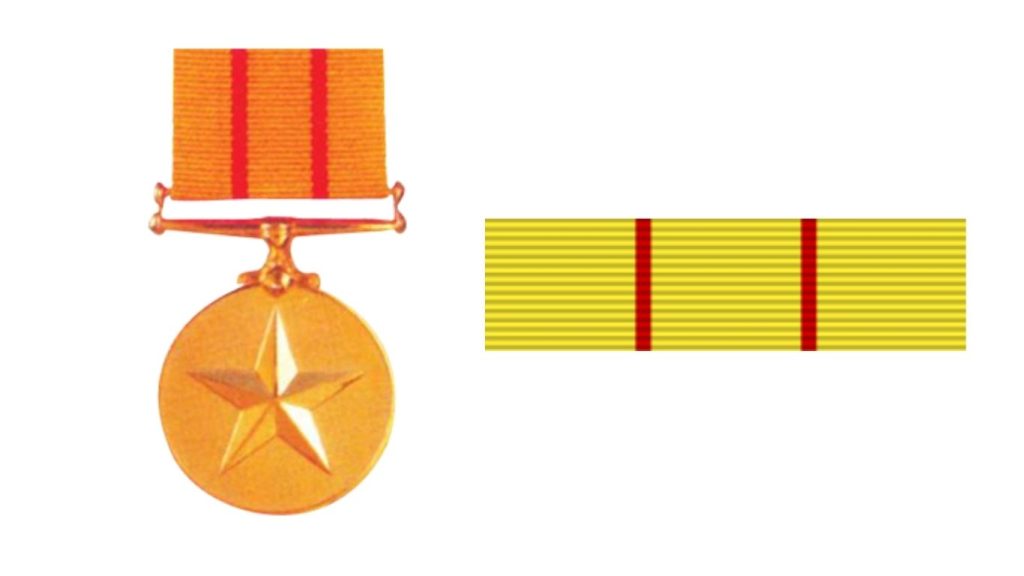
The UYSM is the second-highest among the wartime distinguished service medals of India. It was also established alongside SYSM, and translates to, “Great War Service Medal”.
This service medal is similar to the SYSM in design, and has a five-pointed star as well. Some of the personnel who have received this medal are General Dhiraj Seth and Vice Admiral Tarun Sobti among others.
Ribbon: Golden with two red stripes
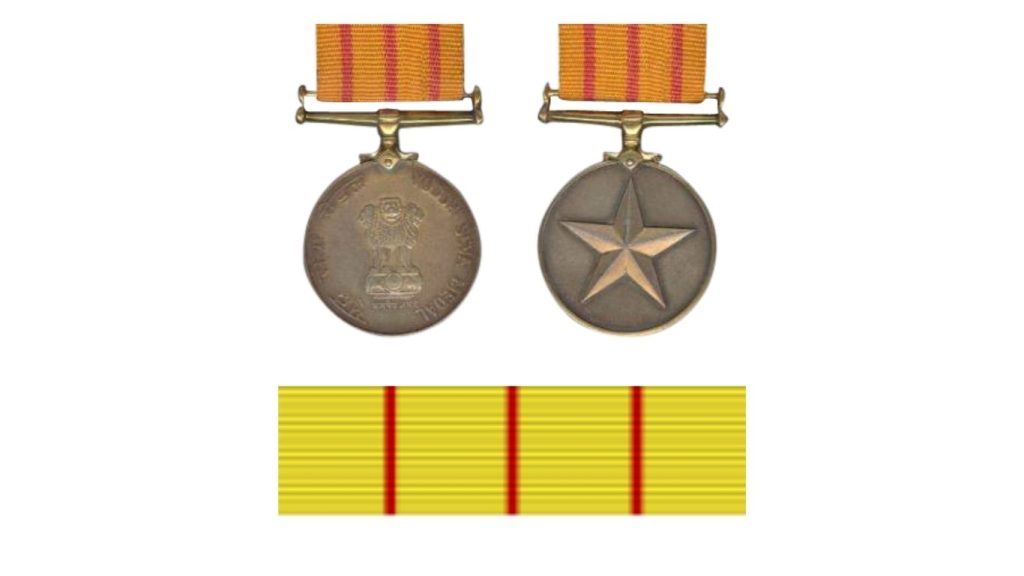
Yudh Seva Medal
The Yudh Seva Medal (YSM) is the third-highest wartime service medal and means, “War Service Medal”. It was established in 1980 and follows the same design as SYSM and UYSM. The only difference is that it features its name as well. Till date, it has been awarded to Vice Admiral AN Pramod and Brigadier Banit Singh Negi among others.
Ribbon: Golden with three red stripes
Peacetime Service Medals
Next are the peacetime service medals of India which are awarded for the distinguished service of Indian Armed Forces personnel when the country is not at war. Just like the wartime service medals, these recognize the contribution only, and not an act of bravery. These medals are of three types as well:
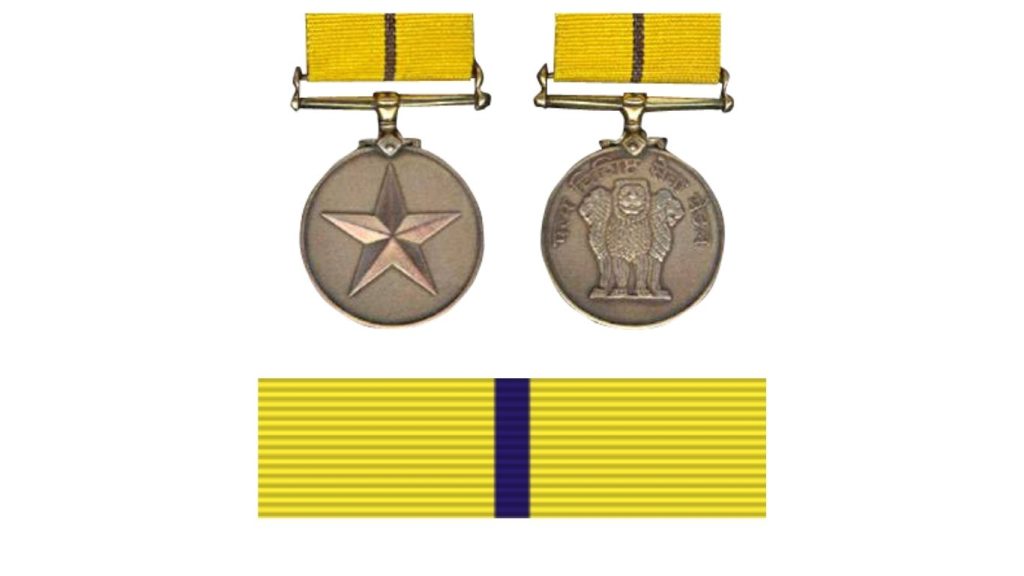
Param Vishisht Seva Medal
The Param Vishisht Seva Medal of PVSM is the highest of the peacetime service medals of India, which translates to, “Supreme Distinguished Service Medal”. It was established in 1960 as the Vishisht Seva Medal Class I. However, it was renamed seven years later.
The PVSM is a circular medal of gold gilt and its front has a five-pointed star, while its back has the country’s National Emblem with the words, “Param Vishisht Seva Medal”. Some of its recipients include Lt General Manoj Kumar Katiyar and Air Marshal Tejinder Singh.
Ribbon: Golden with one vertical blue stripe in the centre
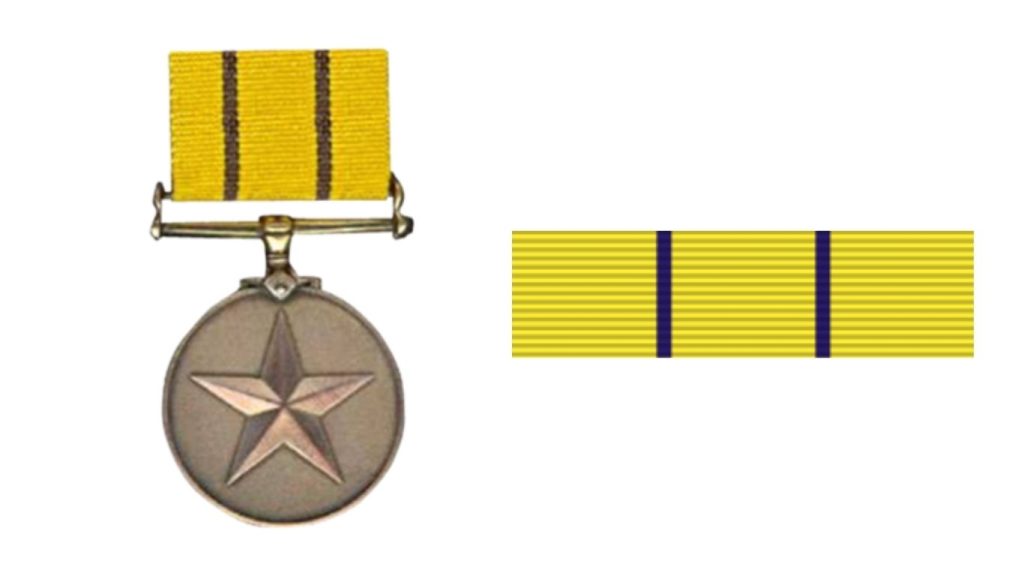
Ati Vishisht Seva Medal
This is the second-highest peacetime service medal which is abbreviated as AVSM and translates to, “Very Distinguished Service Medal”. It was established in 1960 as Vishisht Seva Medal Class II and renamed as AVSM later. The medal follows the same design as the PVSM. However it has its named etched on the reverse. Its notable recipients are Subedar S Hokato Sema and ADG Donny Michael.
Ribbon: Golden with two blue stripes
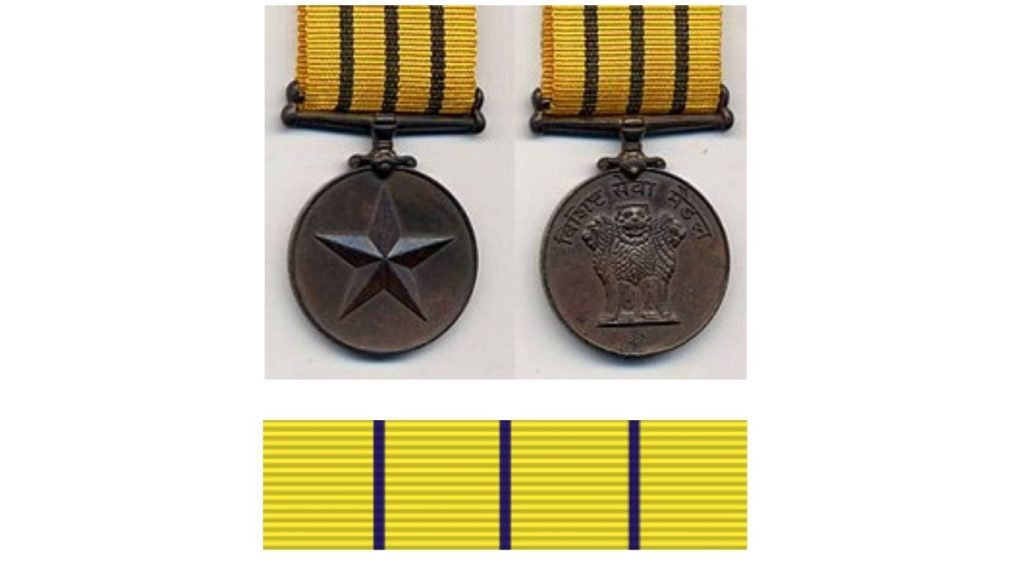
Vishisht Seva Medal
The VSM is another service medal which means, “Distinguished Service Medal”. It, too, was established as Vishisht Seva Medal Class III in 1960 and designed similar to the PVSM and AVSM, with its name etched on the medal. Some of the personnel who has received the VSM include Sq Ldr Baljit Krishna Kapur and Sergeant Inder Sain.
Ribbon: Golden with three blue stripes
Final Thoughts
Please know that these aren’t just decorations of an armed forces personnel, but stories of their exceptional contribution at war and peace which has ensured an edge for the country at all times. Hence, being a defence aspirant, you must know of these medals as well.