

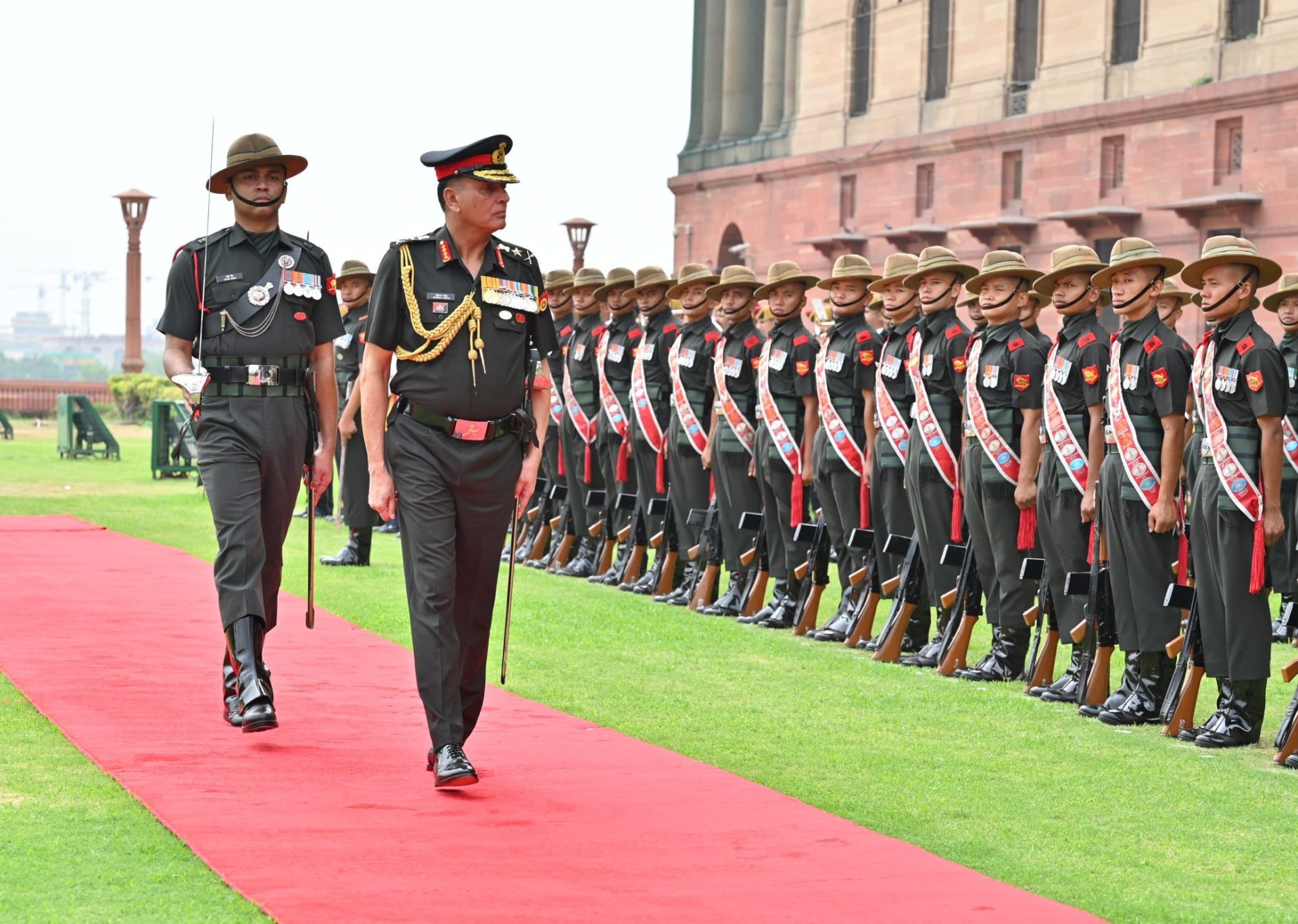
Have you ever seen a military ceremony presided by a senior officer and heard people describing it as a form of honour? But, what exactly is this, and who gets it? Well, a Guard of Honour is a formal military ceremony which is conducted to honour an official or commemorate an important event. Today, we tell you everything you must know about this military tradition.
What is The Guard of Honour?
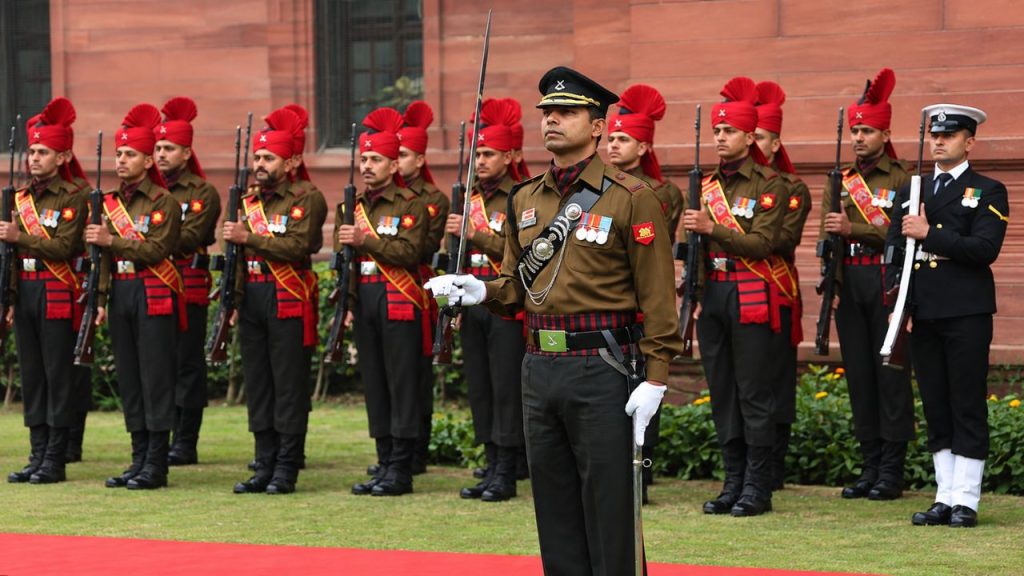
Let us begin by understanding the meaning of Guard of Honour. As we have told you above, a Guard of Honour is a special military event in which military personnel present a ceremonial salute to a visiting official or an individual being formally honoured. This official could be a senior officer of the tri-services, the President of India, or even the Head of State of a friendly country.
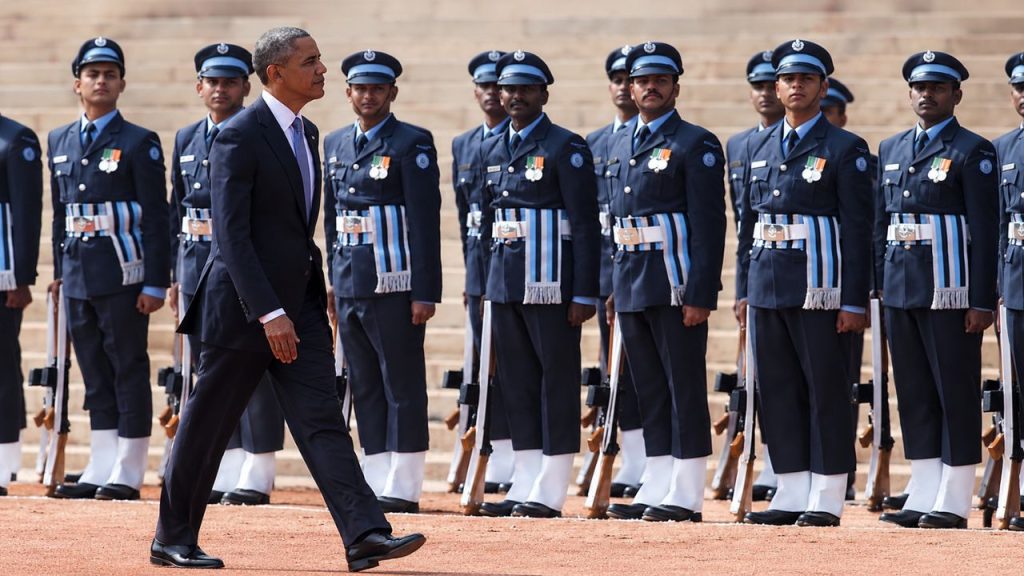
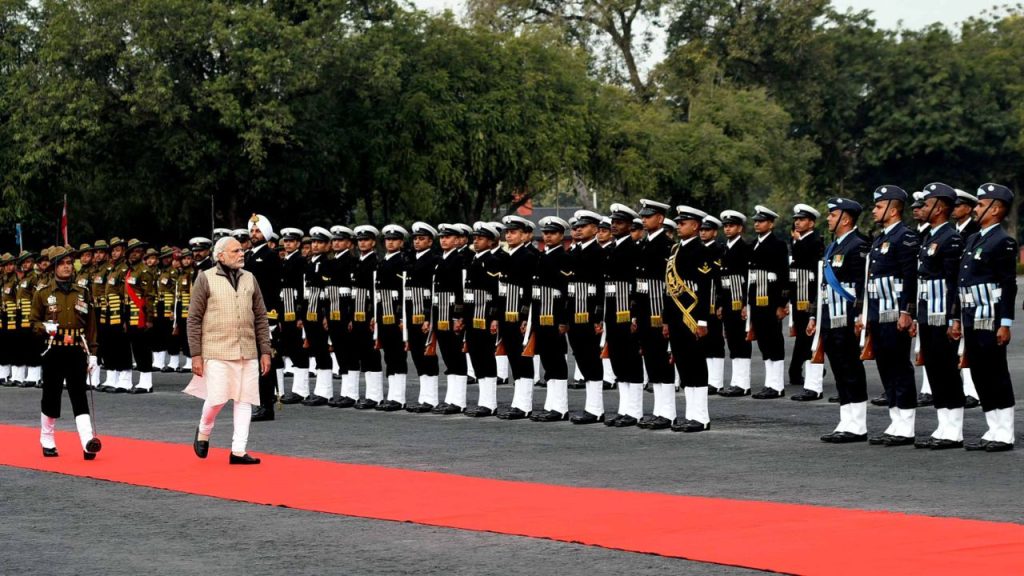
Those who participate in the ceremony undergo rigorous training to maintain precise movements, posture and drill. It often also involves an inspection of the guard by the official to whom it is presented, which is followed by ceremonial movements and a salute.
When is The Guard of Honour Given?
Now, you might wonder when a Guard of Honour is given. Like we have already told you, this is an important military event, hence, it is generally organised during important state, military and diplomatic events. Some common occasions on which such an honour is presented include:
- Visits of important international dignitaries like the Head of State of a friendly nation
- Ceremonial events of the military such as superannuation of the Army Chief
- Key diplomatic events or gatherings
- Functions organized by the State
For example, when General Dhiraj Seth, PVSM, UYSM, AVSM assumed the role of the Chief of Army Staff, he was presented the Guard of Honour by military personnel.
Importance of Guard of Honour
Next in line is the importance of a Guard of Honour. After all, there has to be a reason why this military occasion is organized. Please know that this Honour isn’t just a military display but reflects way more than you can imagine. A Guard of Honour symbolizes and reflects:
- Respect to the person who is presented the Honour
- Discipline, military coordination and etiquette
- Mutual trust and cooperation with the foreign country whose dignitary is visiting
- Honour and commemoration of those who sacrificed their lives for the motherland
Hence, the Guard of Honour occupies a special place in major events that carry immense importance. Now, we will understand how a Guard of Honour is given.
How is The Guard of Honour Given?
After finding out about the basics of Guard of Honour, let us delve into how this military tradition takes place. We have provided you with the sequence which is generally followed by the personnel.
Forming Up and Arrival of Dignitary
The first step in giving the Guard of Honour is forming up. Here, right before the dignitary arrives, the personnel take their positions. This is what we call forming up. They remain in that formation in the perfect display of military discipline and ensure that they are all in the correct position.
Once the stage is set, and the dignitary has arrived at the venue, the same is announced as per military protocol through commands that are loud and clear. This is a signal for the Guard to hold their formation as the Guard of Honour is about to begin.
General Salute and Reporting
Right after the announcement, the dignitary advances to the designated saluting base, which generally faces the Guard. Here, the personnel present the salute. This is followed by the Guard Commander’s formal report to the dignitary.
Again, this report is loud and clear like the military commands and it signifies that the Guard is ready for inspection by the visiting dignitary. Hence, the latter gets ready for the same.
Inspection and Salute
Finally, the dignitary descends the saluting base and begins the inspection of the Guard of Honour. For this, he walks through the formation, while the Guard maintains its position. It acts as a formal review of the Guard’s final effort.
Soon after this, the prescribed ceremonial salute is given. The exact manner can differ depending on the occasion and the dignitary. For example, during the Independence Day, the Guard of Honour is presented after the PM unfurls the National Flag, and the National Song and Anthem are played with the simultaneous firing of the gun as part of the 21-gun salute.
After the final act, the Guard Commander announces the conclusion with commands, and the Guard of Honour concludes.
Conclusion
Hence, the Guard of Honour is an essential part of our military ceremonial tradition. It showcases the professionalism and discipline of our armed forces via its precise drill, coordinated movements and formal protocol. Therefore, it occupies a vital space in special occasions of the State and military.