


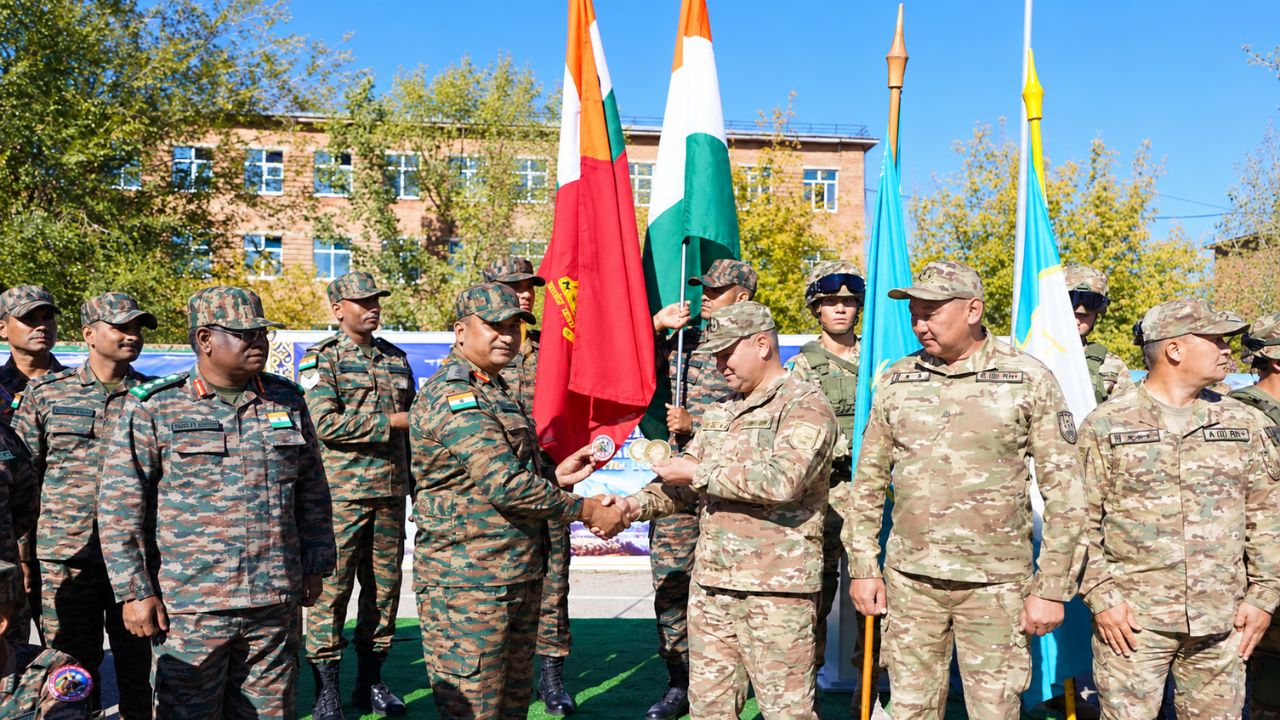
Annual military exercises are an integral part of any country’s preparedness for its armed forces and India works along similar lines. To strengthen its cooperation and resilience, it conducts many such exercises with foreign forces and the KAZIND 2026 is a similar endeavour.
With an increasing focus on counterterrorism initiatives, the Indian Army has been training with the Armed Forces of Kazakhstan. Today, we tell you exactly what this collaboration is and its implications.
What is Exercise KAZIND 2026?
KAZIND 2026 is an annual military exercise conducted between the Indian Army and the Armed Forces of Kazakhstan to strengthen military cooperation. It was initially known as Exercise Prabal Dostyk but the name was changed to KAZIND, derived from the names of the two countries, and it was upgraded to a company-level exercise.
This year, the collaborating forces are observing the ninth edition of Exercise KAZIND 2026 at Oskemen in Kazakhstan. It began on 28 September and will continue till 11 October. This year the idea is to be more focused on counter-terrorism operations and interoperability.
A total of 60 troops of the Garhwal Rifles of the Indian Army are representing India, along with troops from the Indian Air Force. What marks this exercise as important in the use of drones and modern technology, which would make the forces prepared for changing warfare.
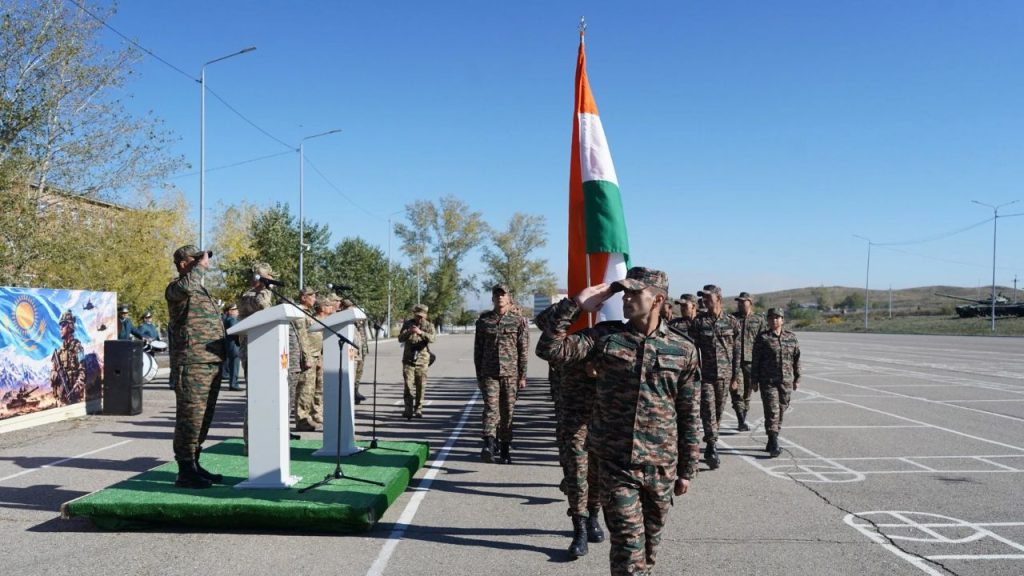
Training in Mountainous and Urban Terrain
A striking feature of KAZIND 2026 is its focus on mountainous and urban warfare. This is particularly important as operating in such terrain brings many challenges due to restriction of movement, limited visibility and complex geographical features.
Hence, the Armed Forces of both the nations are working on tactical missions, terrorist attacks, raids, search and destroy operations and cordon and search operations. This is because both, India and Kazakhstan, face terrorist threats and other unconventional warfare.
Apart from this, the involvement of the Indian Air Force has also welcomed training to secure helipads and landing sites as well as some special heliborne operations.
Integration of Drones and Counter-Drone Warfare
Another major part of KAZIND 2026 is the integrated use of Unmanned Aerial Systems and Counter-UAS capabilities by the participating contingents.
Today, drones have become an increasingly essential part of modern warfare. They are used for intelligence gathering, surveillance, reconnaissance, identification of target et cetera. Hence, militaries should not just know how to use these drones but also how to detect, track and counter hostile unmanned systems.
This is why the forces have integrated technology and modern systems to better enhance their capabilities during counterterrorism operations.
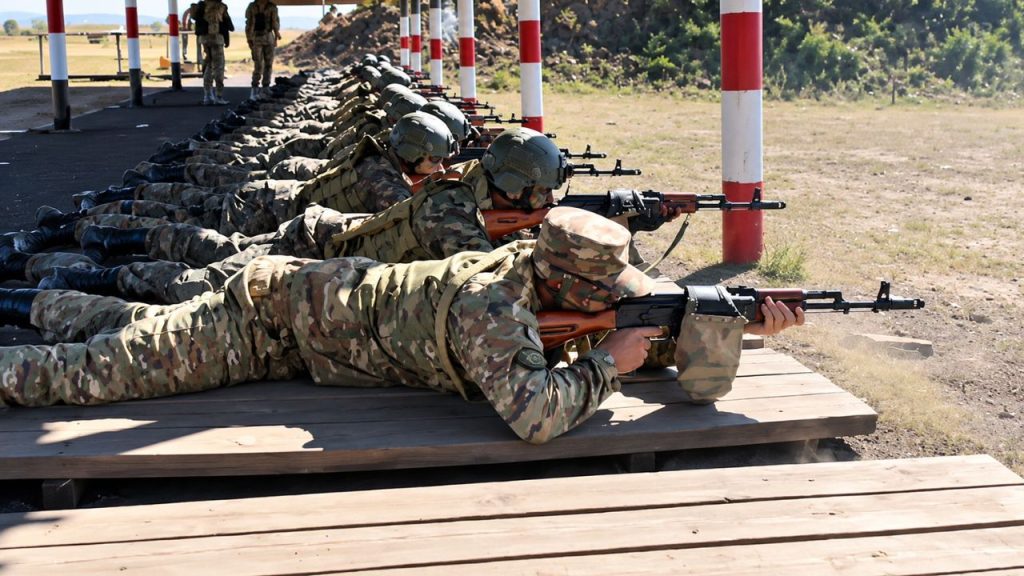
Joint Command Post and Intelligence Centre
Lastly, KAZIND 2026 has also seen the establishment of a Joint Command Post and an Intelligence and Surveillance Centre. This has majorly been done for the following two reasons:
- Facilitating coordinated planning and execution between the two contingents via the Joint Command Post.
- Supporting the sharing and coordination of operational information using the Intelligence and Surveillance Centre.
These will be instrumental in providing commanders with timely intelligence to identify threats, understand the operating environment and coordinate the deployment of troops during counterterrorism operations. Hence, such elements have been included in KAZIND 2026.
Final Thoughts
KAZIND 2026 offers an opportunity for soldiers from both, India and Kazakhstan, to exchange their operational experiences and understand each other’s military procedures. It also helps build interoperability, professional relationships and mutual trust among the two nations.
Hence, this joint military exercise represents a lot more than a conventional counterterrorism exercise between two countries. It is a combination of mountain and urban warfare, air mobility, drones, counter-drone systems and joint intelligence structures, which together reflect the changing character of combat and military operations.