


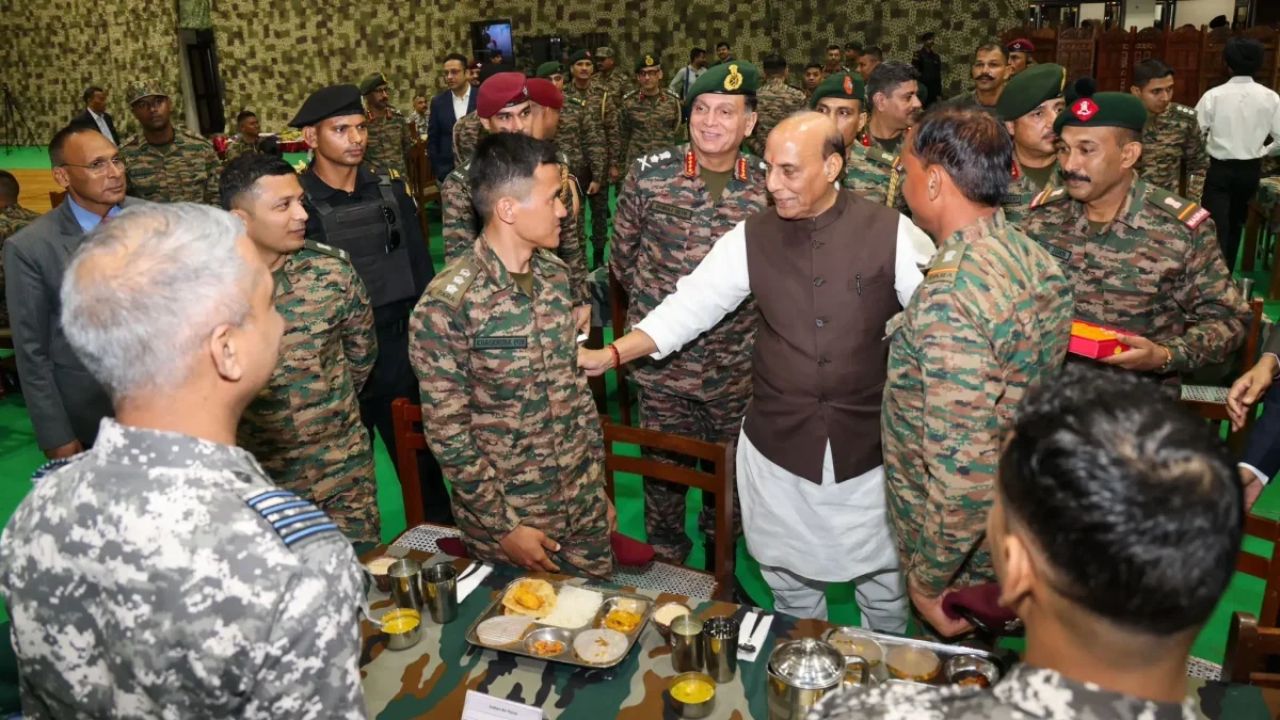
Every year, as we celebrate the festival of lights at our homes with our families, those who guard us stay miles away from theirs. Hence, continuing the tradition of visiting the borders during festivals, the military leadership of India carried out Diwali celebration with soldiers. It was a reminder of the sacrifice of these men and women, and our gratitude towards them.
Interestingly, the Diwali celebration with soldiers was for personnel from all the three services, with the Defence Minister and the three service chiefs visiting different posts and stations.
Raksha Mantri and CoAS Visit 33 Corps
First, we speak of the Indian Army’s Diwali celebration with soldiers. On 8 November, 2026, the Defence Minister of India, Shri Rajnath Singh visited the Trishakti Corps or 33 Corps in the forward areas of Sikkim.
He was accompanied by the Chief of the Army Staff General Dhiraj Seth, PVSM, UYSM, AVSM and other senior Indian Army officers. At Sherathang, the Defence Minister interacted with Army personnel, acknowledged their courage and professionalism, and paid tribute to the fallen soldiers at the Sherathang War Memorial.
Furthermore, he described the dedication and vigilance of troops as a source of security for the entire country. The visit underlined that the safety citizens enjoy during festivals is closely linked to the commitment of those guarding the borders.
IAF Chief Celebrates at Forward Area
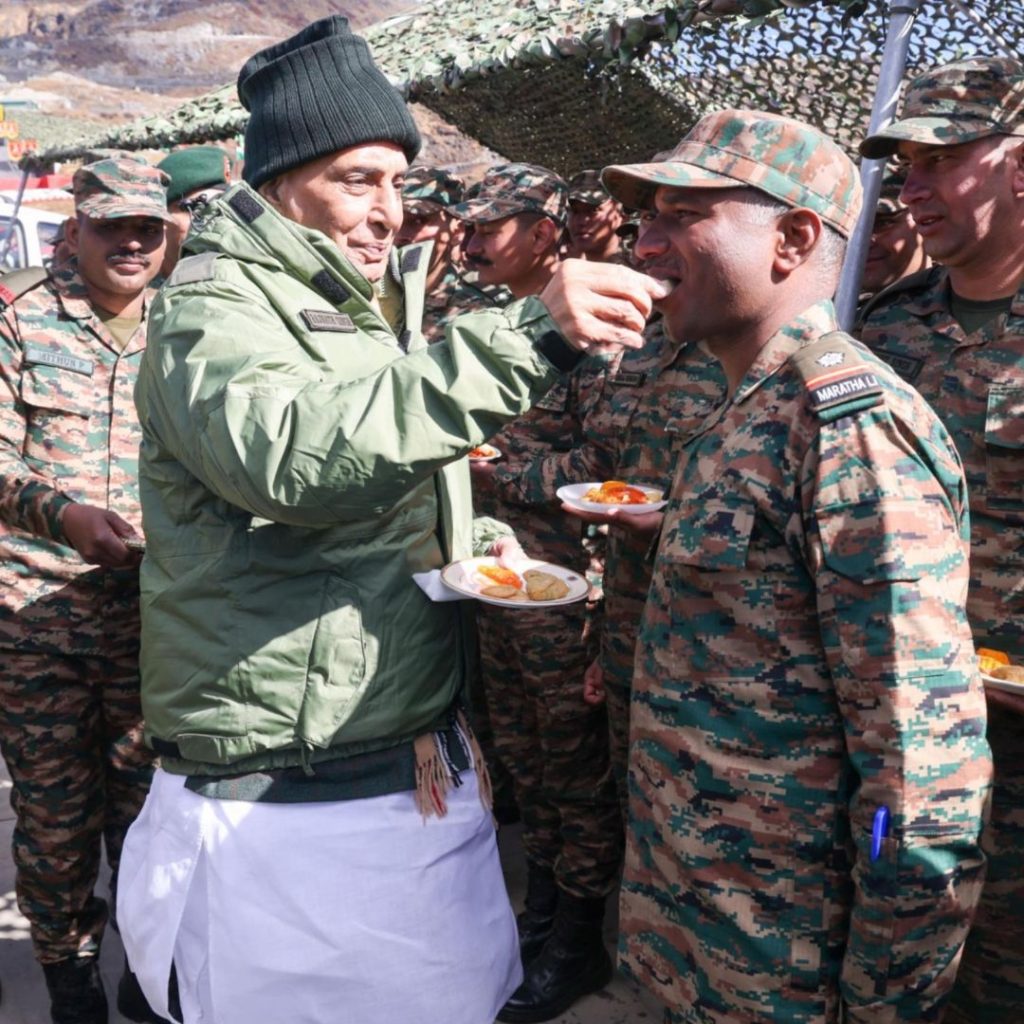
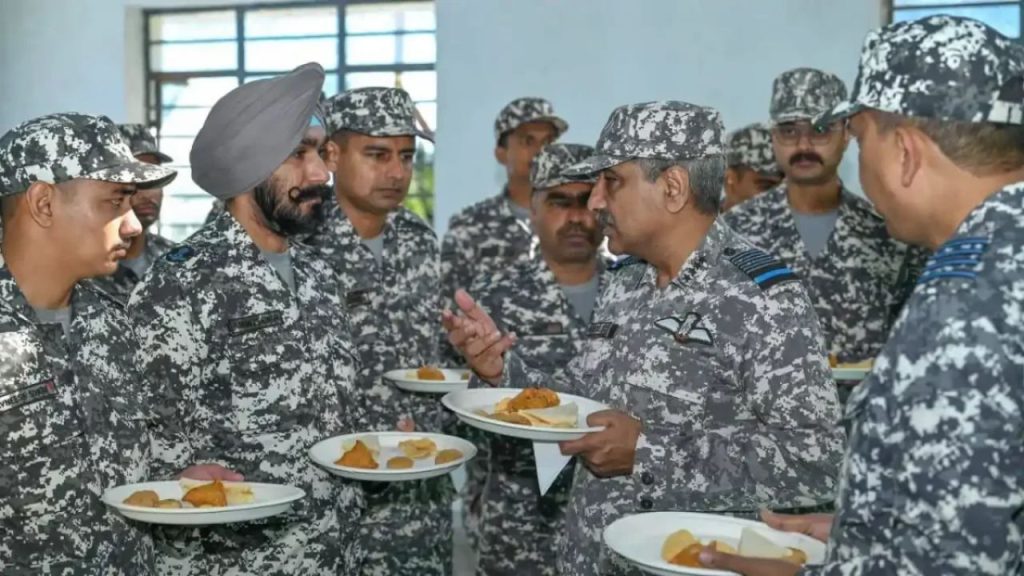
Now, we come to the Diwali celebration with soldiers of the Indian Air Force, which was marked with a similar gesture. The Chief of Air Staff Air Chief Marshal Ashutosh Dixit, PVSM, AVSM, VM, VSM also visited a forward Air Force station and celebrated with Air Warriors and Agniveer Vayu personnel.
This was his first visit after assuming charge as the 29th IAF Chief and hence, holds significance. The top officer also exchanged festive greetings, distributed sweets and appreciated the contribution of personnel in keeping the nation’s skies secure.
For frontline personnel, such interactions communicate that their work and sacrifices are recognised at the highest levels of military leadership.
Admiral Swaminathan’s Diwali Celebration With Soldiers
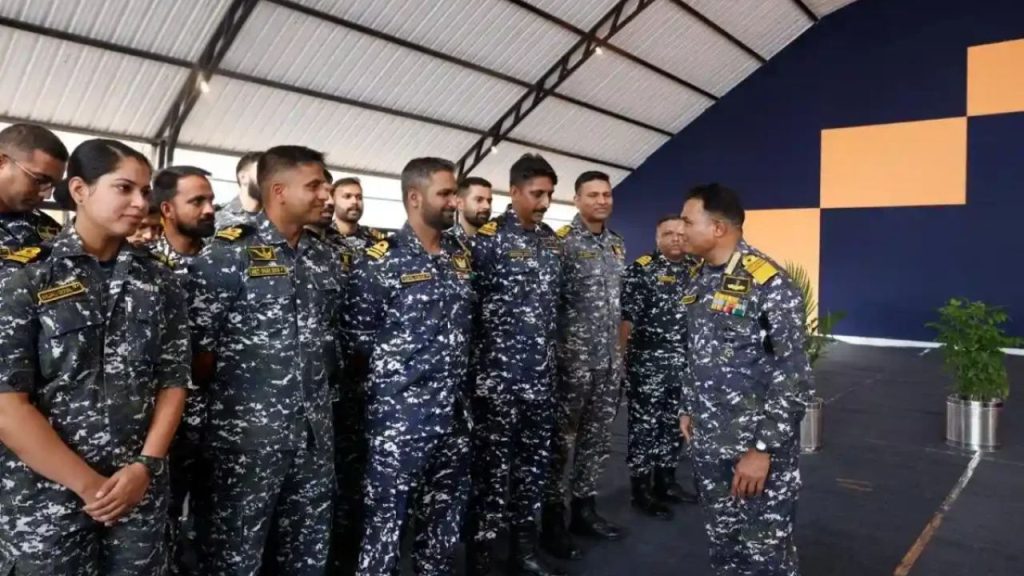
Lastly, we have the Indian Navy’s Diwali celebrations with soldiers which took place in Gujarat. The Chief of the Naval Staff Admiral Krishna Swaminathan, PVSM, AVSM, VSM visited a forward operating base and other naval units to extend greetings.
The visit was a blend of festive interaction and professional assessment as the Navy Chief reviewed the operational readiness, infrastructure development plans and the capabilities of units in the state of Gujarat. It reflected the organization’s focus on personnel morale and operational preparedness.
Significance of The Visits
The three visits for Diwali celebration with soldiers highlight a reality of military service which many of us miss out on: national responsibilities do not pause for festivals.
Even during festivals, the Army personnel serve in difficult border terrain, Air Warriors maintain vigilance over the skies and Naval personnel safeguard our maritime interests. This separates them from their immediate duties towards their families as the duty to serve the nation occupies primacy.
A lot of times, we do not even acknowledge this sacrifice as civilians, hence, the visits by top leadership seek to express gratitude symbolically and practically. They allow senior leadership to:
- Meet personnel
- Listen to their concerns
- Acknowledge the demands of operational life
- Reinforce trust and cohesion between leadership and troops
- Review of readiness and infrastructure
However, we must not forget that appreciation must extend beyond a single day. The well-being of personnel depends on sustained attention to equipment, infrastructure, healthcare, family support, leave and suitable living conditions in difficult postings.
Therefore, visits like the Diwali celebration with soldiers looks into this aspect as well.
Final Thoughts
From the high-altitude areas of Sikkim to forward air and naval establishments, the Diwali celebration with soldiers in 2026 became an occasion to recognise those who protect India on land, in the air and at sea. The lights and celebrations at home may be visible to all, but they are made possible in part by the vigilance of those standing guard.
These visits offer a timely reminder that the commitment of the armed forces continues even when the rest of the nation is celebrating. Hence, remembering their service should not be limited to festivals; it should remain a year-round expression of national gratitude.